DNA Replication
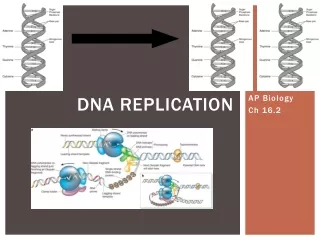
DNA replication is a crucial process occurring during interphase, allowing cells to reproduce through mitosis or form gametes via meiosis. The process begins with the enzyme DNA helicase unwinding the DNA strands. Subsequently, DNA polymerase adds complementary nucleotides to each strand, resulting in two new DNA molecules, each containing one new and one old strand. Although errors can happen during replication, DNA polymerase proofreads and corrects these to prevent mutations, ensuring genetic fidelity and species survival.

DNA Replication
E N D
Presentation Transcript
DNA Replication • Every time a cell reproduces by mitosis or a gamete is formed by meiosis, DNA is copied during Interphase in a process called replication. • Without replication, species could not survive and individuals could not successfully grow and reproduce.
How DNA Replicates • Replication begins as the enzyme DNA helicase breaks the hydrogen bonds between the nitrogen bases that hold the two strands together.
2. As the DNA continues to unzip, another enzyme, DNA polymerase, adds complementary nucleotides to each strand. 3. This process continues until the entire DNA molecule has been unzipped and replicated; resulting in the formation of two new DNA molecules, each composed of one new and one old strand.
Checking For Errors • During replication, errors do occur; however, DNA polymerase “proofreads” each strand. • If the previous nucleotide is incorrectly paired, DNA polymerase can remove it and replace it with the correct one. • This proofreading prevents most errors in DNA replication. Only one error per 1 billion nucleotides! • These errors or changes in nucleotide sequence, are called mutations.