Comprehensive Guide to RCRA Decontamination Procedures
Learn about decontamination plans, layout, equipment, procedures, and safety measures for handling RCRA drums safely. Understand contamination risks and protection of decon personnel in different scenarios.

Comprehensive Guide to RCRA Decontamination Procedures
E N D
Presentation Transcript
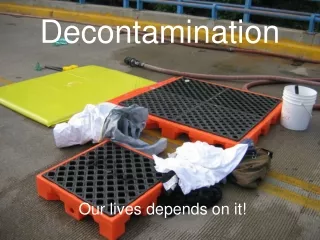
Decontamination • Contamination may occur in many ways: • air concentrations • splashes • liquid puddles, contaminated soil • using contaminated instruments • Protective clothing, work practices, Decon • Decon Plan • number, placement, equipment, SOPs
RCRA Decontamination • The plan should be based on a worst case scenario and the following factors • type of contaminant • amount of contamination • type and level of PPE • work function • location of contamination • “real” possibilities
RCRA Decontamination • Basic Layout • Contamination reduction zone • Exclusion zone • marked entry and exits • distinct progressive decon areas • Basic Plan • Physical removal of contaminants • Chemical removal of contaminants • Decontamination of Equipment
RCRA Decontamination • Protection of Decon Personnel • PPE level depends on level of contamination • one level lower rule (be careful) • Medical Treatment • Decon delayed until the victim is stable • Unless it does not interfere in life saving. • Don’t expose the care giver
RCRA Drum Handling • Visually inspect for: • leaks • symbols, words, other markings • indication it is lab pack, contains conatiners • deterioration • pressurization • head configuration (be careful) • drum material (be careful) • other indicators
RCRA Drum Handling • Handling is required to • respond to problems (leaks) • organize drums for staging or shipment • Handling Hints • proper lifting techniques • load capacity • use PPE • prepare overpacks for use if needed • plan the move
RCRA Drum Handling • Over Pressure Drums • avoid opening near unnecessary personnel • use lab packs • Deteriorated Drums • if rupture possible, transfer liquids • If leaking or open use lab-pack • Drum Opening • designated area if possible • use nonsparking tools when available
RCRA Drum Handling • Drum Opening (continued) • use remote devices if possible • conduct air monitoring • open exotic metals or synthetics thru bung • Drum Sampling • Samplers are often different than openers • Never stand on drums to sample others • Collect samples with glass rod or vacuum • NEVER mouth siphon
RCRA Drum Handling • Drum Characterization • Collect samples through entire depth of drum • Use characterization to segregate • Describe physical appearance of material • Mix small samples of drums to be bulked for compatibility tests looking for precipitation, phase changes, temperature changes. • Whenever possible do analysis on site using GC or HazCat Kit