Understanding Heart Failure: Pathophysiology, Causes, and Treatments
390 likes | 490 Vues
Heart failure is not merely a diagnosis but a collection of clinical symptoms arising from various causes leading to inadequate oxygen delivery by the heart. This guide explores the definition and pathophysiology of heart failure, age-specific causes, clinical presentations, and essential investigations. It outlines strategies for treatment, including preload and afterload management, along with the roles of adrenergic receptors and various medications. Understanding these concepts is crucial for an effective approach to managing heart failure in patients of all ages.


Understanding Heart Failure: Pathophysiology, Causes, and Treatments
E N D
Presentation Transcript
Heart failure Dr Rafat Mosalli
Objectives • Definition • Pathophysiology • Age specific Causes • Clinical pictures • Investigations • Treatment
Definition • Difficult to define • It is not a diagnosis, but rather constellation of clinical symptoms and signs due to various causes • Inadequate O2 delivery by the heart to meet the demand of the body • O2 delivery=O2 blood content +COP
Preload • Amount of volume filling ventricles during diastole • Proportional to volume status • Increasing preload=increases stroke volume (in general)
Preload Problems Either there is not enough preload or The heart needs more than usual
Too little or heart need more? • Dehydration • Blood Loss • Post-operative blood loss • Third Spacing due to Decreased oncotic pressure or Vascular leak. • Hyper dynamic circulation
Back to Preload - treatment Crystalloids vs. Colloids
Crystalloids Isotonic Fluid : • Normal Saline • 154 mEqNaCl/l • Lactated Ringers • 130mEq Na+ • 4mEq K+ • 3mEq Ca+2 • 109mEq Cl- • 28mEq Lactate
Colloids • Oncotic properties • More likely to stay intravascular • Longer duration of action
Commonly used colloids • 5% Albumin • 25% Albumin • Plasma - FFP • Packed Red Blood Cells (PRBC’s)
Contractility • Somewhat dependent on preload • Impaired Secondary to: • infection • metabolic • hypoxia, ischemia • surgery
How else can we affect contractility? Adrenergic Receptors
Alpha receptors • Peripheral vasculature • Stimulation causes vasoconstriction • Increase SVR and afterload
Beta-1 receptors - Heart Stimulation leads to a cascade of activity • Activates adenylatecyclase • Increases cAMP production • This increases Ca+2 entry into the cell • Increases strength of contraction (inotropy) and rate of contraction (chronotropy)
Beta-2 receptors - lungs • Located in the lungs and peripheral vasculature • Stimulation causes smooth muscle relaxation • Bronchodilation in the lungs • Vasodilation in peripheral vasculature
Adrenergic Agonists: drugs • Dopamine • Dobutamine • Epinephrine
Dopamine • Alpha, beta and dopaminergic agonist • Effects: • ‘renal’ dose • Middle range: more beta • Higher range: alpha starts to predominate • Use: inotrope, vasoconstriction
Dobutamine • b1 selective • Effect: increased inotropy and chronotropy • Use: to increase contractility
Epinephrine • works at all receptors b>a
Afterload • Refers to work against which the heart is contracting • Either :an immediate obstruction such as valvular stenosis or hypertrophy Or related to systemic vascular resistance • As you might imagine decreasing the afterload will help the heart to contract
Afterload Reduction: drugs • Nitroprusside • Nitroglycerin • Nitric Oxide
Who needs afterload reduction? • Decreases force against which heart has to contract • Poor LV function or for patients with aortic insufficiency or mitral regurgitation
Heart Rate • We rarely manipulate heart rate(aside from arrhythmias) • heart block drug:Isoproteronol
Back to the Diagram BP = CO x SVR • We’re finally on SVR - systemic vascular resistance
Systemic Vascular Resistance • Remember SVR also contributes to afterload • In general, increasing SVR will increase afterload and decrease cardiac output • Since this patient population needs improved CO we usually avoid increasing afterload,
Drugs that increase SVR • Alpha agonists, primarily • Epinephrine • We already talked about this • Norepinephrine • Phenylephrine
causes • First week of life: • Obstructive lesion: COA,AS,HLHS, PS,TAPVR • Volume overload lesion: TR,PR,PDA ,AVM • Others( myocardial contractility dysfunction,arrythmia) • 1-4 weeks: • As Above + shunt lesions (VSD,PDA)
Causes >4 weeks: Shunt lesions as above, coronary and myocardial diseases at any age: -Myocardial & pericardial diseases -Arrhythmia( SVT,heart block) -Sepsis,acidosis,hypoxia -Metabolic (endocrine,Glycogen storage type2) -Drugs -Severe anemia - Tumors
Age specific causes: summary 1-Neonates • Obstructive and ductal dependant lesions 2-Post neonatal • Shunt lesions • Myocardial contractility diseases
Signs and symptoms : • Impaired Myocardial performance: Shock, feeding problems, sweating, FTT, pallor, rhythm problems, Cardiomegaly, gallop rhythm • Pulmonary congestion: Dyspnea, cyanosis, wheezing, tachypnea, rales,cough Respiratory acidosis • Systemic venous congestions Edema ,hepatomegaly, neck vein distention • Specific cause
diagnosis • Hx • Clinical exam • Investigations: Blood work CXR EKG ECHO
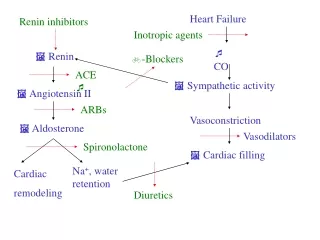
Treatment • Depend on the pathophysiology • Aim: • Increase Preload • Afterloadreduction • Correct Myocardial depressants: • enhance Myocardial contractility
Treatment • Underlying cause(sepsis,CHD) • Rest • O2 • Diet and growth follow-up • Medications: Inotropes Digoxine Vasodilator therapy Diuretics (Furosemide)