Download
1 / 22
220 likes | 339 Vues
Discover the rich legacy of Etruscan art through remarkable artifacts such as the fibula with Orientalizing lions, intricate terracotta temples featuring the iconic Apulu (Apollo), and expressive sarcophagi showcasing intimate depictions of couples. From the architectural glory of the Portonaccio Temple to the vibrancy of the Tomb of the Leopards, this exploration highlights Etruscan society's views on life, death, and the afterlife, illustrated through dynamic figures, ceremonial scenes, and exquisite craftsmanship that bridge Eastern influences with Greek heritage.

E N D
Fibula with Orientalizing lions from the Regolini-Galassi Tomb (Cerveteri), c. 650-640 BCEfibula, a fastening pin found in a tomb/ combining repoussé with granulation/ Eastern influences (Orientalizing lions)
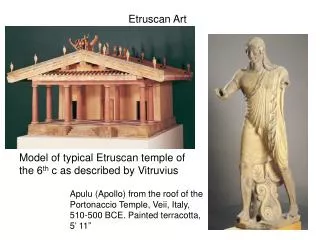
Apulu (Apollo) from the roof of the Portonaccio Temple (Veii), c. 510-500 BCE, painted terracottaEtruscan temples with rooftop terracotta statuary, three cellas, Tuscan columns, and a frontal staircase/ animated figures with an “Archaic smile”/ Apulu (Etruscan Apollo), possibly the work of Vulca of Veii
Left: Reconstruction of an Etruscan templeRight: Apulu (Apollo) from the roof of the Portonaccio Temple (Veii), c. 510-500 BCE, painted terracotta
Herakles form the temple of Portonaccio (Veii), 510-490 BCE, terracotta
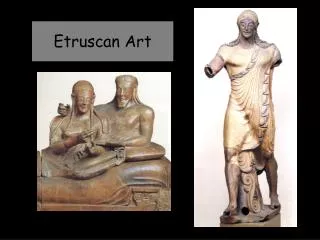
Sarcophagus with reclining couple (Cerveteri), c. 520 BCE, painted terracotta
Etruscan practice of husbands and wives dining together/ animated hand gestures and intimate body language/ optimistic view of the afterlife
Banqueters and musicians from the Tomb of the Leopards (Tarquinia), c. 480-470 BCE
Musicians from the Tomb of the Leopards (Tarquinia), c. 480-470 BCE
Musician from the Tomb of the Leopards (Tarquinia), c. 480-470 BCE
Diving and fishing, detail of mural paintings from the Tomb of Hunting and Fishing (Tarquinia) c. 530-520 BCE
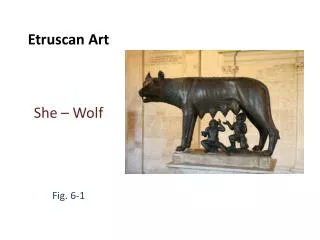
Tarquinius Superbus, the last of the Etruscan kings/ Romulus and Remus (placed on a raft by their mother Rhea Silvia to protect them from the rage of their uncle Amulius) raised by a she-wolf/ mixture of stylization and naturalism, with incised detail
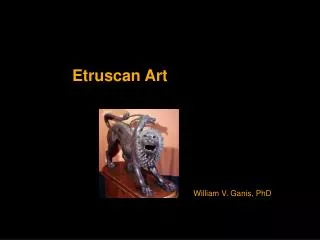
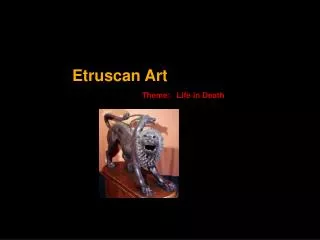
Chimera of Arezzo (Arezzo), early 4th century BCE, bronzea chimera depicted as a composite animal, animated and ferocious/ killed by Bellerophon while riding Pegasus
Mars of Todi, early 4th century BCE, bronzeEtruscan interpretation of the Polykleitan canon/ rarity of nudity in Etruscan art
Novios Plautios. Ficoroni Cista (Palestrina), late 4th century BCE, bronze
Aule Metele (Arringatore, Orator) (Sanguineto), early 1st century BCEself-confidence of a Roman magistrate with an Etruscan name/ resemblance to contemporary Roman portraits and inspiration for later depictions of emperors (such as Augustus)