Industry clusters
This lecture explores industry clusters in agriculture, focusing on geographically proximate groups of interconnected companies and associated institutions. It discusses their importance in adding value, attracting jobs and wealth, and driving the local economy. Special attention is given to the San Joaquin Valley, highlighting production trends, economic impacts, agricultural land changes, and key crops unique to California. The session also addresses employment multipliers, indirect job creation, the significance of exports, and the evolving structure of the agricultural industry—including fewer but larger farms and the influence of technology and global competition.


Industry clusters
E N D
Presentation Transcript
Industry clusters Planning Issues in Ag Lecture 3
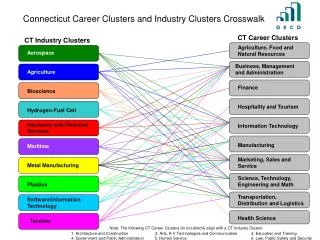
Industry clusters continued… A cluster is a geographically proximate group of interconnected companies and associated institutions in a particular field, linked by commonalities and complementary programs.
Industry clusters continued… • Dependent on each other (add value from raw products and then send to other places to attract money to area) • Attracts jobs/wealth and gives identity • Production to Processing to distribution • Business building with other businesses drives local economy • Adds value to production • Clusters will increase employment • Clusters are geographically concentrated and connected
California Ag Summary • San Joaquin Valley – 8 counties (most productive ag in state and nation) • Experiencing change in population (1970 growth accelerated) • -diversity • -impact on major industry( production and economic) • Gross farm income in 2006 – 31.4 billion (1/2 of CA income) • Farm income in US - % of California in nation is 13%
Since 1948 leading counties have changed Not LA anymore • Fresno 4.8 billion • Tulare 3.9 billion • Kern 3.5 billion • Merced 2.3 billion • Stanislaus 2.1 billion • San Joaquin 1.7 billion 6 counties in SJ are in top 10 only Kings and Madera are missing
All private land in California 1/3 of state private land linked to Ag • 27 million acres in Agriculture in 2000 • 1950 Ag land 37 million Amount of acres declined in Ag…why? • Ag itself fewer farmers • Consolidation – farms have decreased, but size has increased
Farmland Preservation will not stop growth nor stop decline in land. • What kinds of choices do we need to make? • Which Ag land is more or less important? • Which types of development should be encouraged? • Questions debated throughout this course…
Agricultural Land • 2/3 rangeland w/ pastures for cattle / other livestock • 1/3 cropland (9 million acres) 20% in SJ Valley • Different types of soil, water key to quality of land and… • Types of crops that are grown
Specialty Crops Commercially Produced Only in California(99% or more of total U.S. production)* • Almonds • Artichokes • Clingstone Peaches • Figs • Ladino Clover seed • Olives • Persimmons • Plums, Dried (Prunes) • Raisins • Sweet Rice • Walnuts * Source:CDFA Resource Directory 2002
CA productivity Not all consumed in state or nation • Most exported (2000) $6.6 billion Ag product exported • CA export (#1 exporter in nation) • #6 significant Ag exporter in the world
Exports European Union Canada Japan China/Hong Kong Mexico South Korea Taiwan India Australia United Arab Emirates • Almonds • Wine • Cotton • Table grapes • Walnuts • Oranges
CA #1 state in personal income • 7 ½% of all jobs linked directly/indirectly to agriculture • 6 ½ % personal income (all income household) wages, profits, rent, interest Valley: • 30% jobs linked directly/indirectly to agriculture • 20% personal income related to agriculture
Jobs Linked…directly:indirectly • Indirectly – clusters of related industry • Directly - Production of food & fiber • Creates/generates $$$ • Economic activity…employment, income, sales, sales tax • Agricultural ripple effect can be good ( increased income for farmers, businesses etc) • Or it can be bad (reduced income, employment, businesses go under) • All are related to each other especially in the valley
Employment Multipliers for the San Joaquin Valley: 1996 Industry Employment multiplier • Agriculture 1.50 • Mining/construction 1.99 • Food Processing 3.88 • Other manufacturers 2.44 • Transportation/public utilities 2.58 • Wholesale trade 1.77 • Retail trade 1.30 • Fire 2.03 • Services 1.58 • Government 1.37
Share of total industry output • Focus on Ag • Valley 13% CA 3% • Exporting (leaving region) • Ag and food processing is the highest
Farm wage and salary employment growth in 1983 – 2000 Importance 2000 1983 • Valley higher 17.5% 20.% • Than CA 2.7% 3.4% • 1 out of 5 jobs in CA is Agriculturally related • Most people think that agriculture is considered open space instead of business.
Where does the information come from? • Every 5 years there is an ag census: • It measures: # of acres, change in # of farms, decrease in amount of land, decrease in # of farms, # of family farms • Currently finishing the 2007 Census…should be available soon
Structure of Ag is changing (3 points) • Population…fewer people involved in production agriculture, more people involved in services that provide for agriculture’s needs • Importance of Ag clusters…related businesses depending on each others’ prosperity • Changing structurally…less farms, larger farms…vertical integration…direct marketing
Factors in Agriculture Changing • Technology - yields are higher, but not net yields ? • Vertical integration • Foreign competition • Regulatory costs • Consolidation may be the key, but family farms may suffer
Cause and Effect… • In recession ( ¼ of farmers bankrupt) • Purpose of public policy is to pressure Ag or an individual
Now…Consider the effects of Planning on individual property rights… • Next lecture…