Download
1 / 13
130 likes | 253 Vues
The Ming Dynasty (1368-1644), founded by Zhu Yuanzhang, marked an era of stability, reintroduced Confucianism, and saw notable achievements in culture and exploration, led by admiral Zheng He. It was characterized by economic growth through agriculture and the construction of the Forbidden City in Beijing. However, its downfall came with the Manchu invasion, leading to the establishment of the Qing Dynasty (1644-1911), which expanded China's territory and focused on Confucian governance. Both dynasties exemplified the complex tapestry of Chinese history marked by strengths and weaknesses.

E N D
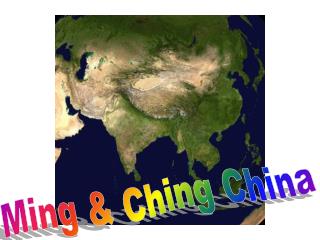
Ming & Qing China 19.2
Fall of Yuan Dynasty • 1368 – Bubonic Plague • Chinese-led peasant army revolts and throws Mongols out of China.
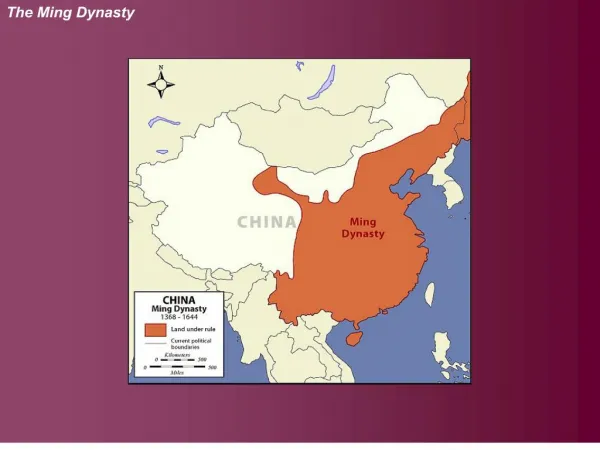
Ming Dynasty (1368-1644) • Ming = “brilliant” • Founded by Zhu Yuan Zhang • A Chinese commoner, led army to capture capital city (Dadu) • Proclaimed himself Emperor Hong Wu • Changes: • Brought stability & peace • Reintroduced Confucianism • Centralized the government • Increase economy through agriculture
Ming society & Culture • Emperor Yong Le organized Chinese encyclopedia… 23,000 manuscript rolls!! • Novels • Silks
Ming Exploration • Zheng He • Sent on 7 expeditions (1405-1433) • Emperor wanted to control trade in Indian Ocean • Commanded 317 ships w/ 28,000 soldiers • Traveled to: • Southeast Asia • India • Persian Gulf • Arabia • East Africa • Used diplomacy over force, when possible • Trips ended in 1430s – too expensive, refocus on agriculture (even destroyed maps!)
1421: The Year China Discovered America (by Gavin Mendies) • Argues that Zheng He actually reached America first. • Records supposedly destroyed, colonies forgotten Answer Question #2 Zheng He’s Ship Answer Question #1 Columbus’ Ship
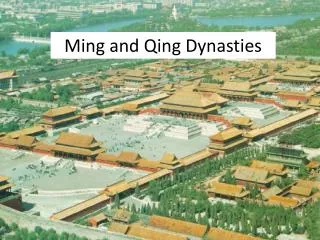
The Forbidden City • Yong Le moved capital city to newly-rebuilt Beijing • Forbidden City = complex of palaces, great halls, courtyards, gardens, moats • 30 ft. high walls • City within a city • Outer layer had high-ranking officials • Within inner red wall lived the emperor’s family (only eunuchs allowed) Answer Question #3
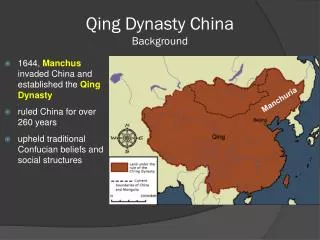
Qing Dynasty (1644-1911) • Qing = “pure” • 2nd time foreigners ruled China • Extended Chinese territory to: • Tibet, Manchuria, Mongolia, Taiwan Answer Question #4
Manchu meets Chinese Answer Question #5 “Keep your hair and lose your head Or Lose your hair and keep your head” Answer Question #6
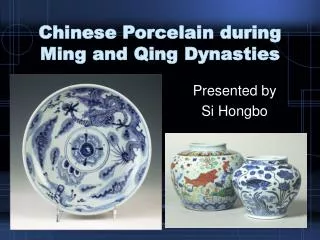
Qing Policies • Emperor Kangzi • Organized flood control & irrigation projects • Confucian scholar • Labor-intensive farming • Internal trade (specialization) • Europeans came beginning in Ming Dynasty, looking for: • Tea • Porcelain • Silk • Policy of Isolation • Called Europeans “ocean devils” • Refused to trade with outsiders
In-class prompt • Role: Newspaper Writer • Audience: Newspaper Readers • Format: Eulogy • Topic: Praise the strengths & criticize the weaknesses of either the Ming or Qing Dynasties. • Include: two strengths, two weaknesses, three policies or changes