Advances in Excited State Analysis Using EOM-CCSD and Multiconfigurational Methods
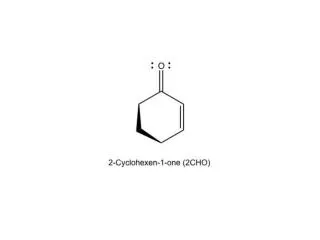
This study presents a detailed analysis of the excited states of 2CHO, highlighting the significant geometric changes observed between singlet states. We demonstrate that DFT-based methods yield erroneous results, while EOM-CCSD methods provide the most accurate descriptions for the excited states. Future work will focus on employing multiconfigurational methods, including CASSCF and NEVPT2, to further explore excited states. Acknowledgments are given to our collaborators at UW-Eau Claire, Northwestern University, and other contributing institutions, alongside funding from the NSF and Dreyfus Foundation.

Advances in Excited State Analysis Using EOM-CCSD and Multiconfigurational Methods
E N D
Presentation Transcript
3902 3901 98.4 cm-1 000 99.6 cm-1
Conclusion • Corrected mode description of inversion • ~250 cm-1vs ~100 cm-1 • DFT based methods lead to erroneous results • Significant change in geometry from the singlet states • EOM-CCSD based methods best for the excited states of 2CHO
Future Work • Multiconfigurational and explicitly multireference methods for excited states • CASSCF • NEVPT2 • Expansion of EOM-EE-CCSD results in a triple zeta basis set
Acknowledgements • UW-Eau Claire • Dr. Christine Morales • Northwestern University • Dr. Rick Van Duyne • Dr. George Schatz • iOpenShell Center (USC/Krylov Group) • Dr. KadirDiri • Funding • National Science Foundation #CHE-0848615 • Camille and Henry Dreyfus Foundation, Inc. (Henry Dreyfus Teacher-Scholar Award) • UW-Eau Claire Office of Research and Sponsored Programs