The Conclusion of World War I: Key Events Leading to the Armistice of November 11, 1918
110 likes | 281 Vues
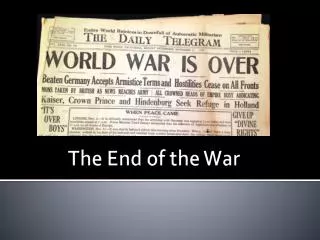
The U.S. declared war on Germany in 1917, marking its entry into World War I alongside the Allies. Despite initial German successes, discontent grew within Germany amid strikes and hunger due to a British blockade. By October 1918, German military and political structures crumbled. On November 11, 1918, an armistice was signed, officially ending the war. Following the conflict, the Treaty of Versailles was drafted, influenced by leaders like Woodrow Wilson, who proposed his 14 Points for rebuilding and ensuring future peace.


The Conclusion of World War I: Key Events Leading to the Armistice of November 11, 1918
E N D
Presentation Transcript
Recall • The US declared war on Germany on April 6th, 1917 • American troops joined the French and British in the summer of 1917 – they were fresh and not war-weary
Victory • German commander, Ludendorff, had won decisive victories over Russia in 1917 that led to the Russian withdrawal from the war • In 1918, Ludendorff said that if Germany won, the allies had to be defeated before American troops arrived • Although his offensive was initially successful, the allies held ground and eventually pushed the Germans back Ludendorff
What’s Going On, Germany? • By 1918, there were strikes and demonstrations in Berlin and other cities protesting about the effects of the war on the population • British naval blockade of German ports meant that thousands of people were starving • Socialists (who wanted industries controlled by government instead of individuals) were waiting for the chance to seize Germany, as they had in Russia
The end is near… • October 1918: Ludendorff resigned; German navy revolted • Nov. 9, 1918: Kaiser Wilhelm II resigned
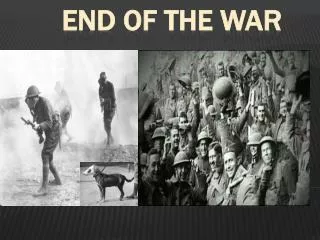
What now? • With Germany falling apart, the leaders of both sides held a meeting on Nov. 11th, 1918 • Armistice was signed at 6am and came into effect 5 hours later • The war was over!
Poll Everywhere Questions • Text answers!!
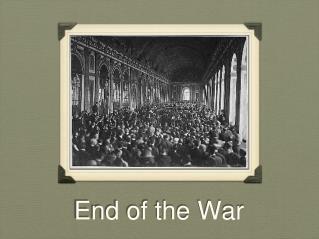
Treaty of Versailles • WWI ended at 11am on Nov. 11th, 1918 • Remembrance Day • Big Four met to discuss how Germany was to pay for the damage caused by WWI • Lloyd George of England • Orlando of Italy • Clemenceau of France • Woodrow Wilson of the US
Wilson’s 14 Points • Open Diplomacy – no secret treaties between powers • Freedom of Navigation – seas should be free in both peace and war • Free trade – barriers between countries should be removed • Multilateral Disarmament – all countries reduce armed forces • Colonies – people in European colonies should have a say in their future • Russia – operate whatever government it wants • Belgium – should be evacuated and restored to the situation before the war
Wilson’s 14 Points (cont…) • France – should have Alsace-Lorraine and any lands taken away during the war restored • Italy – border should be readjusted according to nationality • National Self-Determination – national groups in Europe should be given independence • Romania, Montenegro and Serbia – evacuated, Serbia should have outlet to sea • Turkey – should have a say in their future • Poland – should be independent with an outlet to the sea • League of Nations – assembly of all nations should be formed to protect world peace in the future