Enhancing Nonfiction Comprehension with Vocabulary Strategies and Group Reading Techniques
This post outlines effective strategies for reading nonfiction texts, focusing on the importance of vocabulary for understanding. It suggests using vocabulary post-its to annotate key terms while reading. In small group discussions, participants should wait to address comprehension questions until after reading excerpts, allowing for effective pauses every couple of pages for note-taking. Additionally, journal prompts from Chapter 2 encourage deeper analysis of experiences such as slave coffles, guiding responses with a structured format of claim, evidence, and analysis.

Enhancing Nonfiction Comprehension with Vocabulary Strategies and Group Reading Techniques
E N D
Presentation Transcript
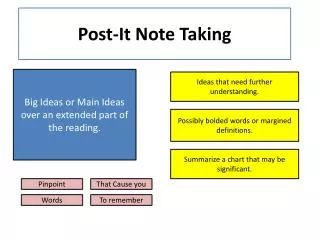
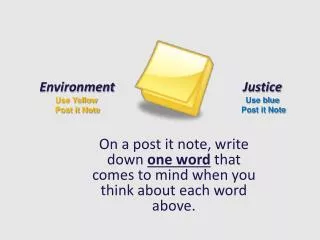
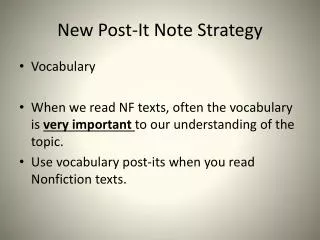
New Post-It Note Strategy • Vocabulary • When we read NF texts, often the vocabulary is very important to our understanding of the topic. • Use vocabulary post-its when you read Nonfiction texts.
Small Group Reading • Everyone should participate. • Wait to discuss any comprehension questions until after an excerpt ends. • Pause every page or two for group members to use post-it notes.
Journal Prompts for Ch. 2 • Page 53-58 describe experiences of those who traveled in slave coffles. What is the key idea of this section of the chapter? Needs to be at least 4 sentences(claim, evidence, evidence, analysis, wrap up) • Why do you think the author included the narrative excerpt by Nacy Williams on page 42? Needs to be at least 4 sentences(claim, evidence, evidence, analysis, wrap up)