Download
1 / 1
30 likes | 162 Vues
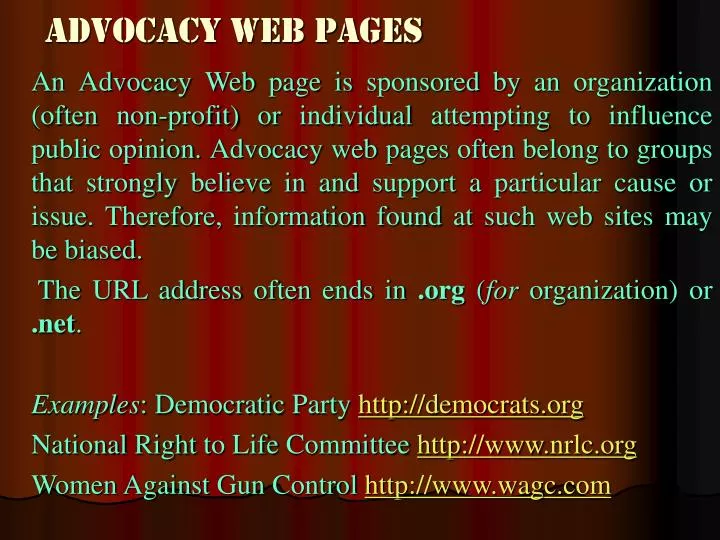
Advocacy web pages are platforms sponsored by organizations, often non-profits, aiming to shape public opinion on specific issues. These sites commonly support a particular cause and may present biased information to further their agenda. URLs for these pages typically end in ".org" or ".net". Prominent examples include the Democratic Party, National Right to Life Committee, and Women Against Gun Control. It's important to recognize potential biases when engaging with content from such sources, as they reflect the beliefs and interests of their sponsors.

E N D
Advocacy Web Pages An Advocacy Web page is sponsored by an organization (often non-profit) or individual attempting to influence public opinion. Advocacy web pages often belong to groups that strongly believe in and support a particular cause or issue. Therefore, information found at such web sites may be biased. The URL address often ends in .org (for organization) or .net. Examples: Democratic Party http://democrats.org National Right to Life Committee http://www.nrlc.org Women Against Gun Control http://www.wagc.com