Download
1 / 8
80 likes | 190 Vues
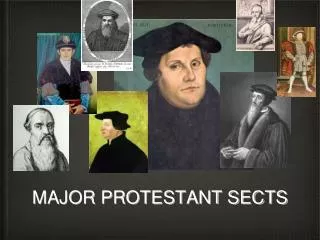
This overview explores major Protestant sects that emerged during the Reformation, focusing on figures like Ulrich Zwingli of the Swiss Reformed Church, Anabaptists Conrad Grebel and Menno Simons, and Calvinists led by John Calvin in Geneva. The text highlights the theological differences among these groups, such as their views on the Holy Trinity and governance under theocracy. It also discusses the establishment of the Anglican Church under King Henry VIII, the rise of Presbyterianism through John Knox, and the community-led congregationalism initiated by Robert Browne.

E N D
Swiss Reformed Church • Ulrich Zwingli • Zurich, Switzerland • Theocracy based upon more literal interpretation of the Bible. • Alliances with Phillip of Hesse and Schmalkaldic League
Anabaptists • Conrad Grebel • Menno Simon • Upset with slow rate of change - persecuted by more moderate reformers. Munster Mash • Lacks allegiances other than to God
Antitrinitarians • Michael Servetus • Leilo Sozzini • Geneva - until they get burned by persecutions. • Disagree with "holy trinity"
Calvinists • John Calvin (that's convenient) • Geneva, Switzerland (1536) filled a power vacuum after political upheaval. • Helped to formalize all Protestant faiths Institutes of the Christian Religion
Anglicans • King Henry VIII • The least reformed (while Henry was alive) • Primarily concerned with loyalty of subjects.
Presbyterians • John Knox by way of Calvin • Scotland by way of Geneva • Community led by "elders"
Congregationalist • Robert Browne • England until persecuted by more moderate forces. • A more direct relationship with God