Analyzing Investor Performance: Insights from the DALBAR Study
20 likes | 159 Vues
This article explores the findings from the 2014 DALBAR study, "Quantitative Analysis of Investor Behavior," which assessed the performance of average stock and bond investors. By using a method that calculates investor returns through changes in assets—excluding factors like sales and redemptions—realized and unrealized gains, as well as costs, are evaluated. The study highlights the total return rate as a percentage of net investor transactions, emphasizing that past successes of buy-and-hold strategies don't guarantee future performance.


Analyzing Investor Performance: Insights from the DALBAR Study
E N D
Presentation Transcript
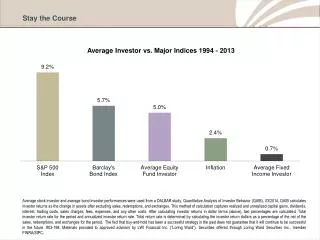
Stay the Course Average stock investor and average bond investor performances were used from a DALBAR study, Quantitative Analysis of Investor Behavior (QAIB), 03/2014. QAIB calculates investor returns as the change in assets after excluding sales, redemptions, and exchanges. This method of calculation captures realized and unrealized capital gains, dividends, interest, trading costs, sales charges, fees, expenses, and any other costs. After calculating investor returns in dollar terms (above), two percentages are calculated: Total investor return rate for the period and annualized investor return rate. Total return rate is determined by calculating the investor return dollars as a percentage of the net of the sales, redemptions, and exchanges for the period. The fact that buy-and-hold has been a successful strategy in the past does not guarantee that it will continue to be successful in the future. #03-198. Materials provided to approved advisors by LWI Financial Inc. (“Loring Ward”). Securities offered through Loring Ward Securities Inc., member FINRA/SIPC.