
Uploaded by
minda
0 SLIDES
275 VUES
0LIKES
Impact Assessment
DESCRIPTION
Impact Assessment. ASA Philippines. Presentation. Impact assessment of the microfinance program Financial performance assessment of microfinance operations Capacity building needs of the management staff to achieve its strategic goals Recommendations to improve the microfinance operations.
Download

1 / 0
Download Presentation

Télécharger la présentation
Impact Assessment
An Image/Link below is provided (as is) to download presentation
Download Policy: Content on the Website is provided to you AS IS for your information and personal use and may not be sold / licensed / shared on other websites without getting consent from its author.
Content is provided to you AS IS for your information and personal use only.
Download presentation by click this link.
While downloading, if for some reason you are not able to download a presentation, the publisher may have deleted the file from their server.
During download, if you can't get a presentation, the file might be deleted by the publisher.
E N D
Presentation Transcript
-
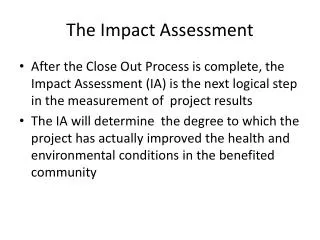
Impact Assessment
ASA Philippines - Presentation Impact assessment of the microfinance program Financial performance assessment of microfinance operations Capacity building needs of the management staff to achieve its strategic goals Recommendations to improve the microfinance operations
- Impact Assessment Impact assessment to existing clients used 95% sampling error Enough sample for microinsurance and dropouts for 90% sampling error
- Demographics ASA clients closely resemble clients of other MFIs in terms of sex, age, civil status and educational level ASA clients are generally younger in the microfinance program compared to other MFIs Almost 9 out of 10 ASA clients are involved in petty trading A significant number of respondents were able to finish tertiary education. This implies that many ASA Phils clients are those who were able to finish schooling, but are unable to find employment.
- Demographics
- Income Trend Main reasons for increase in income were increase in sales and expanding existing business Decrease in income caused by poor sales; natural disaster and economic reasons
- Use of Loan Proceeds
- Economic Well Being: Rating ASA rating from 3.36 to 3.72 Other MFI rating from 2.75 to 3.18
- House Improvement
- Diet Improvement Diet improvement: Able to eat more meat, rice and vegetables
- Impact on Education 11% of ASA clients have at least one child not in school 85.7% expressed that the microfinance program helped them in sending their children to school. The program helped them to provide daily allowance; pay tuition fees; provide for projects, assignments and other school requirements
- Impact on Education
- Impact on Education
- Gender Of those who shared the loan with their husbands, 99% used the loan to benefit the household
- Cash Savings Trend 89.5% have cash savings that could be withdrawn anytime Main purpose for saving: prepare for emergency; education of children; and pay for loan Majority of clients save at home
- Business Improvement ASA clients have better business improvement compared to other MFIs: expanded business; and added new product or service ASA clients purchased more equipment for their business compared to clients of other MFIs There is a significant decrease in the number of clients without business after joining the program. Better business condition rating compared to other MFIs from 5.78 to 7.09 versus 5.03 to 6.09 ASA clients spent for food, utilities and schooling from their business income
- Client Satisfaction Features that clients like best: accommodating staff; other financial services such as insurance and savings; faster and efficient service Features that clients like least: loan amount is too small; no other loan window; guarantee policies Client satisfaction rating of 9.24 compared to 9.16 of other MFIs Other services that clients want: better insurance; access to health services and scholarship ASA clients have higher multiple membership (27%) compared to other MFIs (20%)
- Delinquency ASA has lower percentage of clients with one missed payment (17% versus 25%) Causes of delinquency include: selling on credit; sickness; unprofitable business; used for consumption; and disaster
- Client Resignation ASA has higher group/center retention rate (51%) compared to other MFIs (16%) Existing clients say that other clients resign because they are no longer able to pay and they migrate
- Dropouts Majority of dropouts only lasted for one to two loan cycles Majority of dropouts used their savings to fully pay their remaining balance Majority of dropouts made their decision themselves to leave ASA The reasons of the clients for leaving ASA are business-related and economic-related reasons – matches existing clients’ view.















More Related

Audio
Live Player