Characterization
Characterization is crucial in storytelling, revealing the intricacies of characters through various methods. The direct method involves the author explicitly detailing a character's traits, while the indirect method allows readers to infer characteristics through actions, dialogue, and environmental descriptions. Characters can be categorized into types such as dynamic, flat, or stock, each serving unique roles in narrative development. Additionally, point of view plays a significant role in characterization, influencing how much insight a reader gains into a character's thoughts and feelings. This guide explores these elements for deeper literary appreciation.

Characterization
E N D
Presentation Transcript
Method • Direct Method: • Author states the information about a character • A first person narrator provides information about another character
Method • Indirect Method: • A description of the environment provided by the author or a character, is an indirect method of characterization form which the reader can infer information about he characters. • The character’s actions tell the reader about him or her. • A character is revealed through the words or reactions of other characters • A character’s name can sometimes tell an observant reader much.
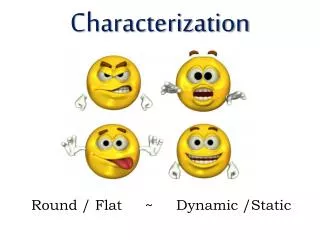
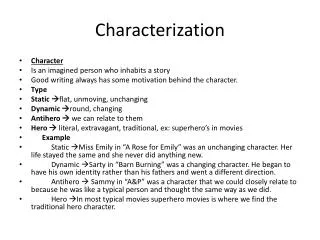
Types of Characters • Round • Complex • Memorable • Dynamic • Change or adjust to different situations • Protagonist is usually dynamic
Types of Characters (cont.) • Flat • Only one or two traits • Simple • Static • Usually minor characters • They do not grow because they lack insight
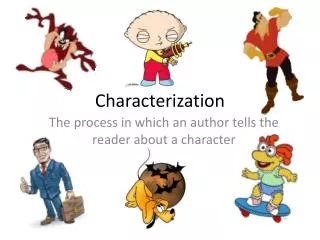
Types of Characters (cont.) • A Stock Character • Stereotype • Specific set of traits • Ex. Overbearing mother, cunning detective, nosy neighbor, hen-pecked husband, and nagging wife
Point of View • First Person • concerns • Limited knowledge • Might be unreliable • Benefits • Direct information
Point of View (cont.) • Third Person • Objective narration • Reporter
Point of View (cont.) • Omniscient Narration • Knows the events and the thoughts and feelings of the other characters. • Often comments on the events and characters • Limited Omniscient • Focused on only one character • Other characters are seen from the outside
Point of View (cont.) • Questions to ask about characterization • How much does the narrator know? That is, from what point of view is the story narrated? • Does the narrator have any characteristics or biases that we should consider when evaluating the characters he or she presents? How reliable is the narrator • From what the narrator presents in this passage, how would I describe the character(s)? What evidence from the passage supports this description?