Download
1 / 4
40 likes | 173 Vues
Body composition plays a crucial role in athletic performance, particularly in sports like cross-country skiing. An ideal body composition varies across different sports, emphasizing lower fat mass for greater performance. The body consists of fat-free mass and fat mass, with fat-free mass predominantly made up of muscle tissue that drives performance. For instance, Olympic cross-country skiers exhibit remarkably low body fat percentages—5% for males and 11% for females—highlighting the significance of lean body composition in achieving athletic success. Understanding this can help athletes optimize their performance.

E N D
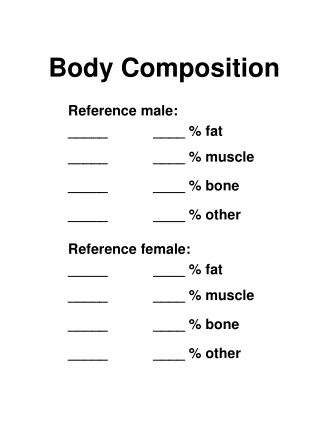
The ideal body composition varies with different sports, but in general the less fat mass, the greater the performance. The body is divided into two components, the fat-free body mass and the fat mass. The fat free mass is composed partly of muscle tissue, which does the work. Body composition refers to the relative percentage of muscle, fat, bone, and other tissue of which the body is composed. • The average male Olympic cross-country skier is 25 years old, 5'10" tall, weighs 165 pounds and has 5% body fat. • The average female Olympic cross-country skiers is 25 years old, 5'7" tall, weighs 141 pounds, and has 11% body fat.
ody Composition and Body Mass • The success of an athlete depends a lot on the body type. Body size, build, and body composition can impair or help performance. Athletic performance relates to body type (body shape and size), and body composition (muscular development and amount of body fat). Body fat contributes no strength advantage and limits endurance, speed, and movement through space. Olympic cross country skiers are extremely lean compared to average males and females.