Overview of Cell Membrane Structure and Function: The Basics and Key Components
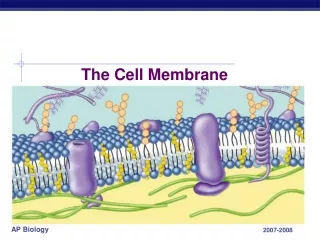
The cell membrane is essential for cellular function, regulating the movement of materials in and out of the cell. It is semi-permeable, allowing only selected substances to pass. Composed of a phospholipid bilayer, it features polar heads facing outward and nonpolar tails inward. Key components include cholesterol for membrane stability, carbohydrates for cell identification, and diverse proteins for various functions, including transport, enzyme activity, and recognition. Understanding these aspects is crucial to grasping how cells interact with their environment.

Overview of Cell Membrane Structure and Function: The Basics and Key Components
E N D
Presentation Transcript
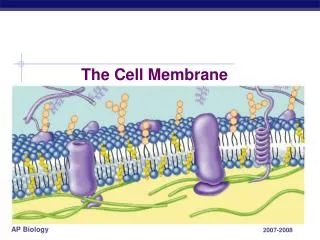
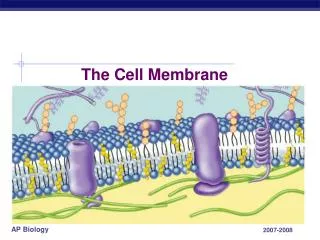
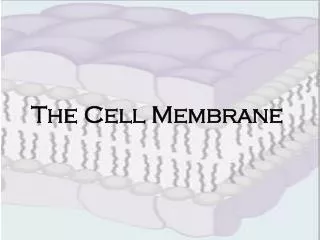
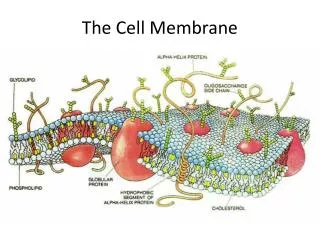
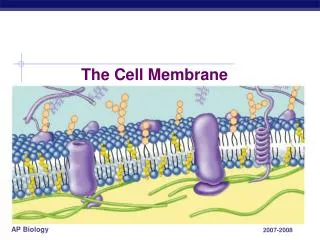
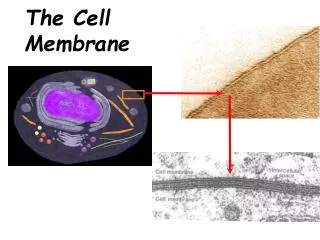
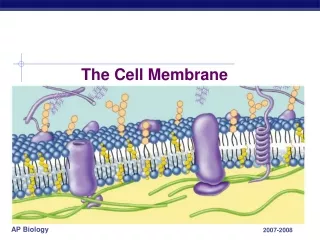
Cell Membrane Basics • Function: Controls the passage of materials into and out of a cell • Semi-Permeable: only some materials may enter/exit • Double layer of phospholipids (bilayer)
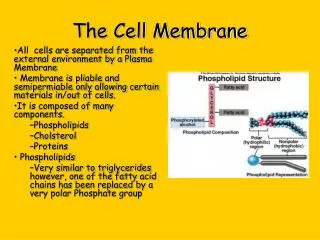
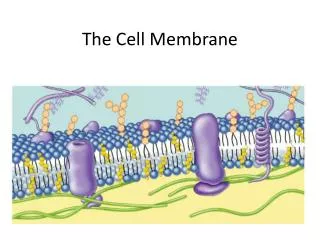
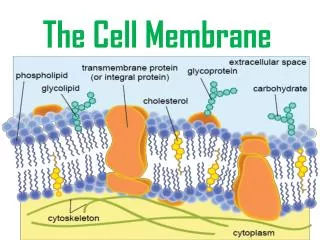
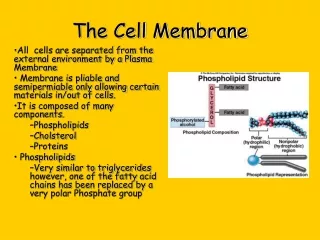
Phospholipid Phospholipid Composition • 3 Parts Polar Head • 1) Phosphate Group • 2) Glycerol Nonpolar Tails • 3) Two chains of fatty acids • Arrangement: • Outside: Polar heads • Inside: Nonpolar Tails
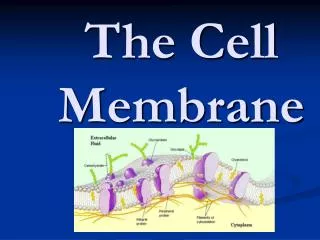
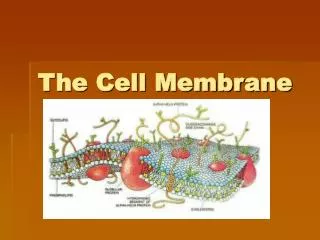
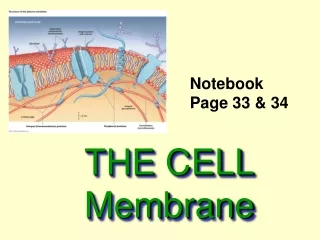
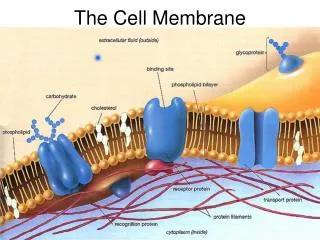
Cell Membrane Contents 1) Cholesterol Molecules: strength 2) Carbohydrates: identification 3) Various Proteins
Membrane Proteins • Randomly scattered through bilayer • Various Functions • Cytoskeleton: internal support • Protein channels: allow objects to pass • Enzymes: speed up chemical reactions • Markers: cell recognition; fight disease