ultimateshop_ (1)
"ultimateshop" serves as a window into the dual nature of online innovationu2014how the same technologies enabling global commerce can also facilitate exploitation when misused.

ultimateshop_ (1)
E N D
Presentation Transcript
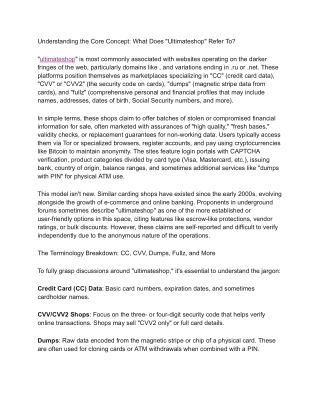
Understanding the Core Concept: What Does "Ultimateshop" Refer To? "ultimateshop" is most commonly associated with websites operating on the darker fringes of the web, particularly domains like , and variations ending in .ru or .net. These platforms position themselves as marketplaces specializing in "CC" (credit card data), "CVV" or "CVV2" (the security code on cards), "dumps" (magnetic stripe data from cards), and "fullz" (comprehensive personal and financial profiles that may include names, addresses, dates of birth, Social Security numbers, and more). In simple terms, these shops claim to offer batches of stolen or compromised financial information for sale, often marketed with assurances of "high quality," "fresh bases," validity checks, or replacement guarantees for non-working data. Users typically access them via Tor or specialized browsers, register accounts, and pay using cryptocurrencies like Bitcoin to maintain anonymity. The sites feature login portals with CAPTCHA verification, product categories divided by card type (Visa, Mastercard, etc.), issuing bank, country of origin, balance ranges, and sometimes additional services like "dumps with PIN" for physical ATM use. This model isn't new. Similar carding shops have existed since the early 2000s, evolving alongside the growth of e-commerce and online banking. Proponents in underground forums sometimes describe "ultimateshop" as one of the more established or user-friendly options in this space, citing features like escrow-like protections, vendor ratings, or bulk discounts. However, these claims are self-reported and difficult to verify independently due to the anonymous nature of the operations. The Terminology Breakdown: CC, CVV, Dumps, Fullz, and More To fully grasp discussions around "ultimateshop," it's essential to understand the jargon: Credit Card (CC) Data: Basic card numbers, expiration dates, and sometimes cardholder names. CVV/CVV2 Shops: Focus on the three- or four-digit security code that helps verify online transactions. Shops may sell "CVV2 only" or full card details. Dumps: Raw data encoded from the magnetic stripe or chip of a physical card. These are often used for cloning cards or ATM withdrawals when combined with a PIN.
Fullz (Full Information): The most comprehensive packages, bundling card details with personal identifiers. These are prized for enabling larger-scale identity-related activities because they allow bypassing certain verification steps. Bases: Collections or databases of card data, often categorized as "fresh" (recently obtained) versus older stock. Sellers on such platforms might advertise "checked CVV" (tested for validity) or "live dumps." Pricing varies widely—sometimes a few dollars for basic CVV to hundreds for high-balance fullz or premium dumps. Transactions are almost exclusively in crypto, with fees for conversions or "top-ups" to shop balances. It's worth noting that these terms originate from the "carding" underground, where individuals or groups acquire data through methods like phishing, malware (keyloggers, infostealers), data breaches, skimming devices at ATMs or point-of-sale terminals, or insider leaks. Once obtained, the data is monetized through shops like the ones referenced under the "ultimateshop" umbrella. How These Platforms Typically Operate From descriptions in various online sources, a typical user journey on an "ultimateshop"-style site involves: Accessing the site through anonymizing tools. Registering an account (often requiring an invite code or referral in some cases). Depositing cryptocurrency into a shop wallet. Browsing categories by region (US, EU, UK, etc.), card issuer, or data type. Purchasing individual items or bulk lots. Receiving the data via the site's messaging system or automated delivery. Testing the data on low-risk sites (a practice called "carding" or "cashing out"). Some shops boast additional features such as search filters, vendor reputation systems, dispute resolution, or even tutorials for beginners. However, reliability is inconsistent.
User feedback in related forums (when available) often mentions high rates of "dead" or invalid data, sudden shop closures (known as "exit scams"), or law enforcement takedowns. Shops frequently rebrand or migrate domains to evade shutdowns. The Larger Ecosystem: Carding Forums, Data Breaches, and Cybercrime Networks "ultimateshop" does not exist in isolation. It forms part of a broader underground economy fueled by massive data breaches affecting millions of records annually. Major incidents at retailers, banks, hotels, and government agencies have supplied the raw material for these markets. Malware families like RedLine, Raccoon, or Vidar steal credentials and card data from infected computers, which then flow into shops. Carding forums serve as meeting grounds where vendors advertise, buyers review products, and techniques are shared. Common discussion topics include "cashing methods" (turning stolen data into usable funds or goods), VPN usage, residential proxies to mimic legitimate traffic, and anti-detection tools. Cryptocurrency enables the entire chain by providing pseudonymous payments, though blockchain analysis by authorities has made tracing more feasible in recent years. This ecosystem also intersects with other illegal activities: selling hacked accounts (streaming services, social media, gaming), ransomware payments, SIM swapping, or even physical goods obtained fraudulently. The "ultimateshop" label sometimes appears in promotional posts or mirrors across these networks. Legal and Ethical Dimensions Engaging with platforms selling stolen financial data is illegal in virtually every jurisdiction. In the United States, for example, it violates federal laws on access device fraud, identity theft, and wire fraud. Similar statutes exist in the EU under cybercrime directives, and many countries have strengthened penalties for receiving or using proceeds of cybercrime. Penalties can include substantial fines, imprisonment, and long-term consequences like ruined credit or travel restrictions. Ethically, every transaction supports a victim-centric harm cycle. Cardholders whose data is compromised face unauthorized charges, time-consuming disputes with banks, damaged credit scores, and emotional stress. Merchants absorb fraud losses or pass costs to consumers through higher fees and prices. Insurance and banks mitigate some impact, but the ripple effects are real—estimated global card fraud losses run into tens of billions of dollars yearly.
Law enforcement agencies, including the FBI, Europol, and specialized cyber units, actively monitor and disrupt these operations. Operations have led to arrests of administrators, vendors, and buyers. Simply visiting or registering can generate digital footprints that investigators later exploit through seized servers, chat logs, or cryptocurrency transaction records. Moreover, buyers face their own risks: many shops are scams themselves, taking payments without delivering usable data ("ripping"). Others may be honeypots or compromised by authorities. Malware distribution disguised as "tools" or "checkers" is another common hazard. Risks Beyond Legality: Personal and Technical Dangers Participants expose themselves to multiple layers of risk: Financial Loss: Crypto payments are irreversible. Scams, failed deliveries, or volatile exchange rates compound losses. Account Compromise: Using the same devices or wallets for illegal activity increases chances of being hacked in return. Tracing and Prosecution: Even with Tor and crypto mixers, advanced forensic techniques can link activities. International cooperation has improved significantly. Malware and Phishing: Underground sites are notoriously unsafe, often hosting drive-by downloads or fake login pages. Reputation and Future Opportunities: A criminal record in this area can bar employment, especially in finance, tech, or government sectors. Statistics from cybersecurity reports highlight how quickly small involvements can escalate. Many "beginners" drawn by promises of easy money end up deeper in the ecosystem or facing consequences that far outweigh any short-term gains. Legitimate Alternatives and Positive Digital Commerce Models Rather than venturing into high-risk underground markets, individuals and businesses have access to countless ethical, innovative options in e-commerce and digital services. Legitimate online shopping platforms offer vast selections of goods with consumer
protections, return policies, and secure payment gateways. For those interested in technology or data-related fields, ethical paths include: Freelance and Gig Economy Platforms: Offering skills in programming, design, or consulting through verified marketplaces. Open-Source and Plugin Development: The term "UltimateShop" also appears in a completely different, legal context—as a popular Minecraft server plugin for Spigot/Paper servers. This open-source or premium tool allows server administrators to create highly customizable in-game shops with dynamic pricing, stock limits, daily rewards, command execution, and integration with popular economy plugins. Developers have praised its flexibility for features like seasonal pricing, VIP discounts, or rotating product menus. It's used on survival, skyblock, towny, and roleplay servers worldwide, demonstrating how "shop" concepts can thrive in creative, rule-based virtual environments without any real-world harm. E-commerce Entrepreneurship: Building legitimate stores on platforms like Shopify, WooCommerce, or Etsy, focusing on dropshipping, handmade goods, or digital downloads (e-books, courses, software). Cybersecurity Careers: Learning ethical hacking through certified programs (CEH, OSCP) to help organizations defend against the very threats that fuel underground shops. Bug bounty programs reward responsible disclosure of vulnerabilities. Financial Education and Tools: Apps for budgeting, investing, or secure banking that empower users rather than exploit them. The contrast is stark: legitimate commerce builds value, creates jobs, and fosters innovation, while underground alternatives destroy trust and invite chaos. The Evolution and Future Outlook Underground carding markets have adapted to increased security measures—EMV chip technology reduced physical skimming, tokenization and 3D Secure improved online protections, and machine learning helps banks detect anomalies. In response, shops emphasize "non-VBV" cards (those bypassing certain verifications) or shift toward other data types like bank logins or crypto wallet seeds.
However, the overall trend shows declining viability for casual participants. Enhanced global cooperation, better blockchain transparency tools, and private-sector intelligence sharing have raised the bar for anonymity. Many once-popular shops have disappeared or been seized. Public awareness campaigns and improved fraud prevention continue to shrink the profitable window for such activities. For server-side "UltimateShop" plugins in gaming, the future looks brighter, with ongoing updates adding more features like database support, custom menus, and compatibility with newer Minecraft versions. This highlights how the same "shop" concept can be channeled productively in gaming communities. Conclusion: Informed Choices in a Digital World The keyword "ultimateshop" serves as a window into the dual nature of online innovation—how the same technologies enabling global commerce can also facilitate exploitation when misused. While some platforms under this name market themselves aggressively in niche communities, the overwhelming consensus from legal, ethical, and practical standpoints is to avoid them entirely. The potential downsides—legal jeopardy, financial loss, contribution to widespread harm—far eclipse any advertised benefits. Instead, channel curiosity and entrepreneurial energy toward constructive avenues. Whether exploring legitimate e-commerce, contributing to open-source projects like Minecraft plugins, pursuing cybersecurity education, or simply shopping safely on mainstream platforms, there are abundant opportunities that reward creativity without compromising integrity or safety. Education remains the best defense. Understanding how data breaches occur, practicing strong password hygiene, enabling multi-factor authentication, and monitoring credit reports can help individuals protect themselves and reduce the supply feeding these markets. Society benefits when more people choose paths that build rather than undermine digital trust.