Enhancing Rural Poverty Reduction through Performance-Based Allocation System (PBAS)
The Performance-Based Allocation System (PBAS) is a crucial decision-making tool developed by IFAD to enhance resource allocation efficiency for rural poverty reduction. During the Ouagadougou retreat held on November 4-5, 2009, key aspects of PBAS were reviewed, focusing on ensuring that countries with conducive environments for sustainable rural poverty reduction receive allocations based on their effective use of resources. The PBAS evaluates country performance across macro frameworks, rural development sector frameworks, and project performance indicators, emphasizing governance, inclusive policies, and increased access to resources.


Enhancing Rural Poverty Reduction through Performance-Based Allocation System (PBAS)
E N D
Presentation Transcript
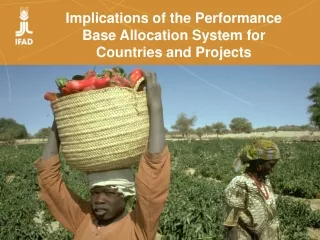
PERFORMANCE BASED ALLOCATION SYSTEM(PBAS) Project retreat Ouaguadougou 4-5 nov.09 Mohamed Tounessi
Background of the evolving PBAS System • IFAD’s Sixth Replenishment (2004-2007) • Enhance development effectiveness • Maximize impact of scarce resources on rural poverty • Focusing resources on the best opportunity for accelerated and sustained rural poverty reduction • PBAS: decision making tool, integrated into Corporate management process • PBAS: • policy dialogue tool with Government • link with COSOP and PSRP
PBAS Objective • Ensure that countries that have created a conducive national, sectoral and local framework for sustainable rural poverty reduction, receive ex-ante allocations of IFAD resources in line with their demonstrated ability to use such resources effectively.
Key PBAS Indicators 3 levels • Country performance assessed at three levels: • Level 1: Macro and Broad Framework, that influence all growth and poverty reduction process, including rural poverty reduction • Level 2: Rural development sector framework • Level 3: Portfolio Performance
Level 1:Indicators of Broad FrameworkAchievements • IFAD’s mandate – Rural Poverty Reduction • No competence to produce performance assessment of the broad framework • Analysis Sources: Country Policy and Institutional Assessment (CPIA)
CPIA Criteria4 key areas under screening • 1. Economic Management • Management of inflation and macroeconomic Imbalances • Fiscal policy • Management of external debt • Management and sustainability of the Development Programme (Governance) • 2. Structural policies • Trade policy and foreign exchange regime • Financial stability • Banking sector efficiency • Competitive environment for private sector
3. Policies for Social Inclusion/ Equity • Gender • Equity of public resources use • Building up human resources • Social protection and labour • Monitoring and analysis of poverty outcomes and impacts
4. Public Sector Management and Institutions • Property rights and rule-based governance (Governance) • Quality of budgetary and financial management • Efficiency of revenue Mobilization (Governance) • Quality of public administration (Governance) • Transparency, accountability (Governance) • Corruption in the public sector (Governance)
Indicators of Rural Sector Framework(Level 2) • Strategic framework 2008-2012 and rural policy papers are IFAD’s indicators for sustainable rural poverty reduction • 5 key areas under screening • 1. Strengthening the capacity of the rural poor and their organizations • 2. Improving equitable access to productive natural resources and technology • 3. Increasing access to financial services and markets • 4. Promoting equitable gender relations • 5. Improving governance relative to rural development issues and activities
Indicators Portfolio Performance (Level 3) • Individual Project Performance • “Project at Risk” (P.A.R.) methodology • “ Problem Project” not meet criteria for Implementation Progress (I.P) • And or Achievement of Development Objectives (D.O.) • IFAD Portfolio Review • IFAD’s Project Status Report (P.S.R)
IFAD P.A.R. flag indicators • Loan effectiveness • Compliance with loan covenants • Project Management Performance • Availability of counterpart funds • compliance with procurement procedures • Quality and timeliness of audit • Disbursement rate • Performance of M & E System • Beneficiary participation • Responsiveness of service providers • Gender focus in implementation • Poverty focus in implementation • Rating guidelines by indicator from 1 to 4 • (Annex 3 handout)