Embracing Growth Mindset: Fostering Resilience in Young Learners
Discover the importance of cultivating a growth mindset in children to enhance their learning experiences. Research shows that hard work, rather than inherent talent, leads to success. Encouraging young learners to view failure as a natural part of the learning process can increase their resilience. This guide offers practical strategies for parents and educators, such as reframing praise to focus on effort and perseverance, promoting a healthy understanding of brain function, and celebrating hard work over mere achievement.

Embracing Growth Mindset: Fostering Resilience in Young Learners
E N D
Presentation Transcript
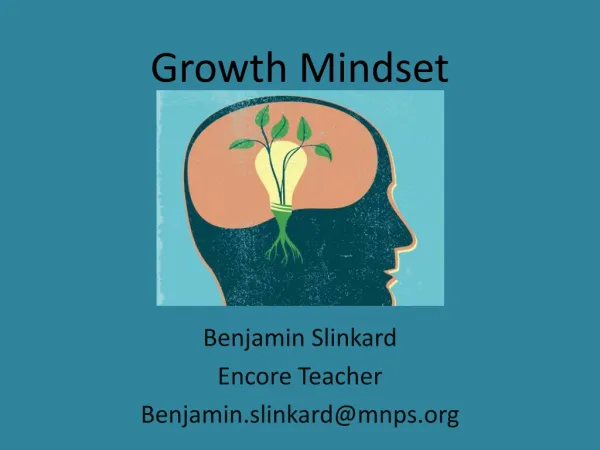
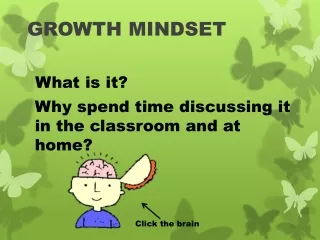
What is it? Why spend time discussing it in the classroom and at home? GROWTH MINDSET Click the brain
Why Discuss Growth Mindset With Young Learners? Years of Neurology Research shows: • Hard work, not inherent talent, brings success to our young learners. • Praising how talented and smart a child is does not foster self-esteem. • Teaching children about how their brains workraises tests scores and productivity and boosts focus. • Students with a fixed mindset will avoid new challenges because their worst fear is failure. Students who develop a growth mindset don’t see failure as something to fear; they see it as a natural step in the learning journey.
Learning About Our Brains Ned the Neuron Creating and strengthening neurons through practice
Connecting the Way Our Brain Works to Practice Click the baby steps
What Can You Do At Home? • Try removing “smart” from your vocabulary when speaking to your child and replace it with words like “hard working,” “focused,” “driven,” and “effort.” • Start thinking about your child’s brain like a muscle. When a task is difficult, let your child take a break to rest their mind muscle and then get right back to the task. • Let your child know that saying “I can’t do it,” is a statement from a person with a fixed mindset. Someone with a growth mindset tells themselves, “I can’t do it, yet.” • Celebrate focus-driven hard work, not just achievement.
Resources • What is a Growth Mindset? • https://safeshare.tv/x/ss588b4646e645c • https://safeshare.tv/x/ss588b4546c6207 • Growth Mindset Videos for Kids • https://ideas.classdojo.com/b/growth-mindset • https://safeshare.tv/submit?url=https%3A%2F%2Fwww.youtube.com%2Fwatch%3Fv%3Dyqe6E-CVNFg • What Can I Do? • https://safeshare.tv/submit?url=https%3A%2F%2Fwww.youtube.com%2Fwatch%3Fv%3Di6Y5j5sMs8w