Animal Body Systems: Nervous, Integumentary, Circulatory, & More
320 likes | 343 Vues
Explore the functions and interactions of key animal body systems, including the nervous, integumentary, circulatory, and more. Learn how these systems work together to maintain health and functionality.


Animal Body Systems: Nervous, Integumentary, Circulatory, & More
E N D
Presentation Transcript
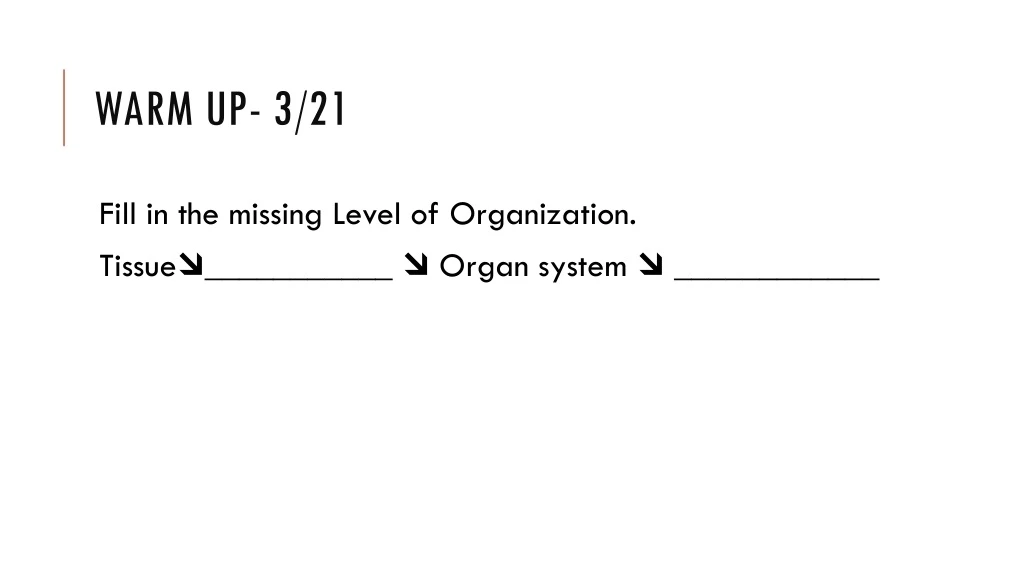
Warm Up- 3/21 • Fill in the missing Level of Organization. • Tissue___________ Organ system ____________
Animal Body systems • NICE RED RIMS • Nervous • Integumentary • Circulatory/Cardiovascular • Endocrine • Respiratory • Excretory • Digestive • Reproductive • Immune • Muscular • Skeletal
Nervous System • Function • Controls all body’s functions • Senses and recognizes information from inside the body and the environment. • Main Parts • Brain • Nerves • Spinal cord
Interactions with other systems: • All systems – helps keep the systems functioning
Integumentary (Skin) System • Function • 1st line of defense against disease • Helps maintain body temperature • Keeps fluids inside • Main Parts • Skin • Sweat glands • Hair • nails
What it helps you do… • Helps you maintain fluids (don’t dehydrate) • Helps you know your environment by feeling things around you • Protect organs • Remove waste
Interactions with other systems… • Works with the excretory and the immune system to help remove cellular waste and protect us from disease.
Circulatory (Cardiovascular) System • Function • Carries blood and nutrients to the cells of the body • Carries waste away from the cells. • Main Parts • Heart • Blood (made up of plasma, red blood cells, white blood cells & platelets) • Veins • Arteries
What it helps you do… • Arteries help carry oxygenated blood away from the heart • Veins carry un-oxygenated blood toward the heart • Capillaries are tiny blood vessels that connect arteries and veins. Gas exchange takes place here.
Interactions with other systems: • Works with the respiratory system to help you transport oxygen and carbon dioxide. • Works with the excretory to help remove waste from the body. • Works with the digestive system to transport nutrients. • Works with the muscular system to help circulate nutrients.
Endocrine System Functions Regulates body temperature, metabolism, development, and reproduction. Homeostasis! Main Parts • Thyroid • Pancreas • Glands
Respiratory System • Function • Gas Exchange: Puts oxygen into the body & removes Carbon dioxide • Main parts • Lungs • Nasal passages • Throat • Nose
Interactions with other systems: • Circulatory – transports vital materials to the cells
Warm Up- 3/22 • Which 2 body systems are responsible for transferring oxygen throughout your body?
Excretory System • Functions • Removes wastes from blood • Removes toxins from blood • Regulates body fluids • Main Parts • Kidneys • Urinary bladder
What system does it interact with: • Circulatory – to help remove waste from the blood
Digestive System • Function • Takes food & breaks it down into nutrients the body needs • Main parts: • Mouth • Stomach • Liver • Pancreas • Small intestines • Large intestines • Rectum
Interactions with other systems: • Circulatory – helps transport nutrients to the body’s cells
Reproductive System • Functions • Produce offspring • Males- make sperm • Females- make eggs
Reproductive System • Main Parts • Male • Penis • Testes • Female • Uterus • Ovary • Vagina
Reproductive System • Main Parts • Male • Penis • Testes • Female • Uterus • Ovary • Vagina
Immune System • Functions • Fights off disease • Main Parts • Lymph nodes • White blood cells • Skin
Interactions with other systems: • Circulatory, integumentary, lymphatic – helps fight diseases
Muscular System • Function • Helps you move. • Moves materials through the body • Main parts • Muscles • Tendons • Ligaments • Muscles in organs
Three types of muscles • Cardiac • Skeletal • Smooth
Muscular Systems help you… • Helps you move • Helps you move materials through the body • Maintain homeostasis • Skeletal muscles work in pairs: one contracts and the other returns to its original length.
Interactions with other systems • Works with the skeletal system to help you move by your muscles pulling on your bones. • Works with the nervous system and controls the types of movements: voluntary (under your control – ex: talking) and involuntary (NOT under your control – ex: heartbeat)
Skeletal System Main parts: • Bones • Cartilage • Connective Tissue Function: • Support your body parts during movement and protects your major organs. • Skull protects the brain • Sternum and ribs protects the heart and lungs • Vertebra protect the spinal cord
Skeletal System Interactions • Works with the muscular system to help you move.