Download
1 / 9
90 likes | 208 Vues
This guide discusses key strategies for effective community development, focusing on the appropriate density for new projects in various regions like Grosse Pointe, Hamtramck, Holdenville, and Shaker Heights. It emphasizes the importance of setting clear goals for development and conservation while evaluating the community's needs. The implementation of a Comprehensive Plan reviewed every 3-5 years is recommended for organizing development efforts, ensuring financial stability, and facilitating consistent decision-making. It advocates for a balanced approach to land use, considering factors such as conservation, historic protection, and farmland preservation.

E N D
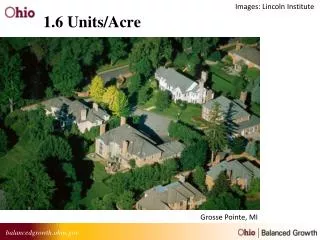
Images: Lincoln Institute 1.6 Units/Acre Grosse Pointe, MI
Images: Lincoln Institute 3.8 Units/Acre Holdenville, Oklahoma
Images: Lincoln Institute 11.2 Units/Acre Hamtramck, MI
Images: Lincoln Institute 19.2 Units/Acre Shaker Heights, Ohio
Density: 1.9 units/ac Density: 3.2 units/ac Images: Lincoln Institute Which has higher density?
Setting Your Goals • Where do you want development and conservation to occur? • What type of development do you want, and what would you like it to look like? • At what density is development most appropriate in any given area of your community? • Community need is driven by people.
Recommendation #1 – Comp. Plan • Comprehensive Plan • Reviewed every 3-5 years • Sets development and conservation goals in an organized fashion • Plans for long-term financial stability • Resolves tradeoffs up-front • Provides for future logical, consistent decision making • Legal stability: logical justification of decisions • Sets a framework for implementation
Strategies for Balanced Land Use Rural Urban Suburban Compact Development Net Increase Conservation Development Historic Protection No Net Change Transfer of Development Rights Scenic Protection Net Decrease Net Decrease Farmland Preservation