Understanding Therapy Dogs: Roles, Benefits, and How to Become One
Therapy dogs provide essential affection and comfort in various settings, including hospitals, nursing homes, and schools. They come in different breeds and sizes, but the key trait is a good temperament—being friendly, patient, and gentle. These dogs help relieve stress, lower blood pressure, and support individuals with emotional and speech challenges. While therapy dogs are not legally protected like service dogs, they play a vital role in enhancing mental well-being. To become a therapy dog, dogs must undergo training and evaluation, ensuring they meet specific criteria.

Understanding Therapy Dogs: Roles, Benefits, and How to Become One
E N D
Presentation Transcript
What is a therapy dog? • A dog trained to provide affection and comfort to people in a variety of settings • Hospitals, nursing homes, hospices • Retirement homes • Schools • Disaster areas • Anyone with a learning difficulty
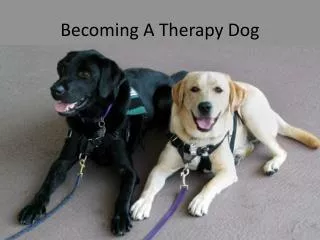
Who can be a therapy dog? • Therapy dogs come in all sizes and breeds • Most important characteristic is: • A GOOD TEMPERMENT! • A therapy dog must be: • Friendly, patient, confident, gentle • At ease in all situations • Must enjoy human contact • Be content to be petted and handled, sometimes clumsily
What does a therapy dog do? • Allow unfamiliar people to make physical contact with it and to enjoy that contact • Children may hug the dog, adults may just pat the dog • The dog may need to be lifted onto, or climb onto, an individual’s lap or bed and sit or lie comfortably there • Some dogs perform tricks! • In hospice, therapy dogs reduce death anxiety
What effect does a therapy dog have? • Relieves human stress • Lowers blood pressure • Raises spirits • Helps children overcome speech and emotional disorders
What are therapy dogs NOT? • Therapy dogs are NOT service or assistance dogs • Service dogs directly assist humans and have a legal right to accompany their owners in most areas • Service dogs are legally protected by the Americans with Disabilities Act of 1990
Can a therapy dog go to school? • Colleges and universities across the US bring therapy dogs to campus • Especially during midterm and final exam weeks to help students de-stress, relax and smile • True Grit (Gritty) – mascot at UMBC and Certified Therapy Dog!
How can I become a therapy dog? • Make sure the owner and the dog have “the right stuff” • Pass basic obedience training • Sit, stay, come, walk well on lead, and “leave it” • Enroll in AKC’s Canine Good Citizen Program • Participate in therapy dog training program • 12 hours of in person instruction • Clean bill of health from veterinarian • Be evaluated by Therapy Dogs International • Send in registration packet!