Download
1 / 13
130 likes | 249 Vues
Human Papillomavirus (HPV) is a non-enveloped DNA virus affecting the skin and mucous membranes in humans. It has over 100 forms, categorized into low-risk types causing warts and high-risk types potentially leading to cancers such as cervical cancer. Transmission occurs via skin and sexual contact, with around 20 million Americans currently infected. While most infections clear on their own, regular Pap smears are crucial for early detection of cervical cancer. Preventive measures include abstinence, condom use, and the Gardasil vaccine, which protects against the most common high-risk HPV types.

E N D
Human Papillomavirus(HPV) Elisa Russo
What is HPV? A non-enveloped DNA virus which infects the skin/ mucous membranes of humans
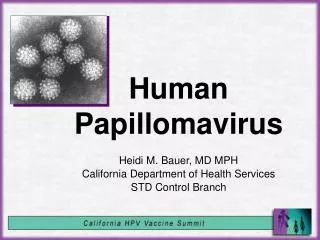
Important Properties • Icosahedral, non-enveloped, circular DNA • E6 and E7 proteins inactivate tumor suppressor gene (P53, RB)
Replication • Malignant: viral DNA integrated to host DNA • Nonmalignant: viral DNA is episomal
Transmission • Skin contact • Sexual Contact 20 million People in America today are infected with HPV
Should You Care? • 100+ forms of HPV • Low Risk: cause warts on the mouth, anus, vagina, vulva, penis and thighs • High Risk: can lead to cancer of the cervix, anus, and other genital areas
Should You Care? • 50% of sexually active people will contract some form of the virus in their life • 90% of the time the virus will go away on its own • Most don’t know they ever had HPV
How to detect Cervical Cancer • A Pap Smear is the only way to detect cervical cancer in its early stages This is a Pap smear showing normal cervical cells. Millions of women aren’t as lucky!
However You Can Decrease Your Chance of Getting HPV • Abstinence • Condom use • Gardasil (protects against 4 types of HPV)