Nitrogen Cycle
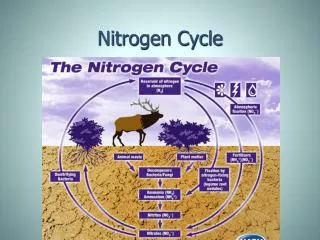
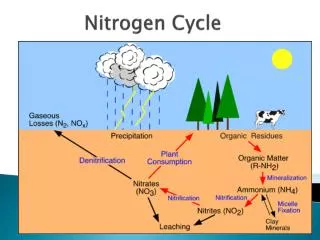
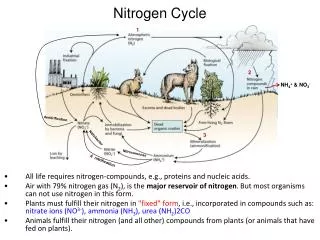
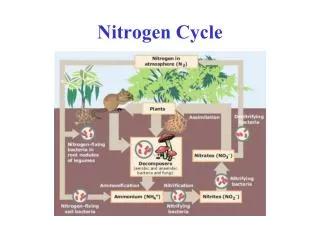
The nitrogen cycle is a vital ecological process, involving the transformation of nitrogen through various forms such as N2, NO, and NH4+. Nitrogen, an essential element for life, is primarily found in the atmosphere and soil as organic compounds. Key processes in the nitrogen cycle include fixation, ammonification, nitrification, and denitrification, which facilitate the availability of nitrogen for plants and microorganisms. Understanding these processes helps in appreciating the balance of ecosystems and the importance of nitrogen management in agriculture and environmental conservation.

Nitrogen Cycle
E N D
Presentation Transcript
Nitrogen Cycle Arranged by: Anna Atiqa Priyadi (11A08005) Ana Dian Rahayu (11A08006) Devinta Dwi Marviana (11A08016)
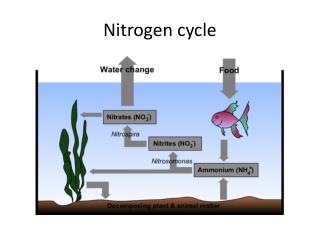
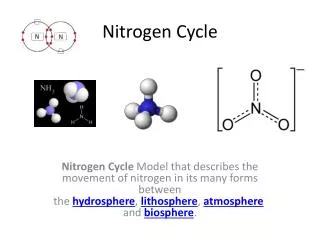
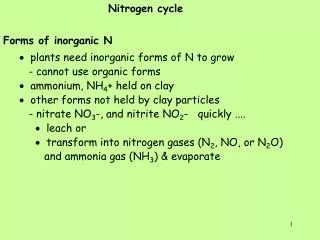
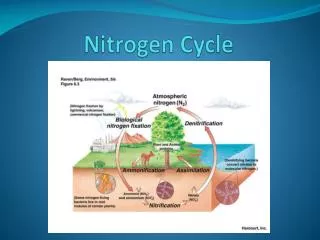
Nitrogen Cycle • Nitrogen is an essentialelement, arranged variety important compounds, both organic and inorganic. • Availability nitrogen in nature is in some form of compounding, which are: N2 (79% volume of air), N2O, NO, NO2, NO3dan NH4+. • In the soil, more than 90% of the nitrogen isin the form of N-organic.
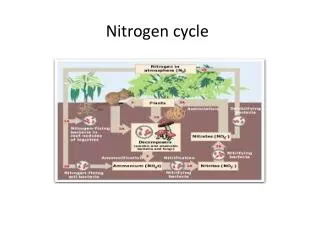
Process of Nitrogen Cycle • Fixation :N2 + 8H NH3 + H2 • Ammonification: N NH4+ • Nitrification:NH4+NO3- NH4+NO2-(Nitrosomonas) NO2-NO3- (Nitrobacter) • Denitrification:NO3- N2 (Bacillus, Paracoccus, Pseudomonas)
Reference • http://www.biology.ualberta.ca/facilities/multimedia/uploads/ecology/ncycle.swf