FDR's New Deal: Tackling the Great Depression
70 likes | 210 Vues
Chapter 23 details Franklin D. Roosevelt's transformative New Deal in response to the Great Depression. Elected in 1932, FDR, a reform-minded leader, promised relief, recovery, and reform, supported by his advisors known as "The Brain Trust." He swiftly implemented significant legislation during the critical "Hundred Days" (March 9 – June 16, 1933), passing over 15 major bills. This era marked an expansion of the government's role in the economy, focusing on immediate relief, boosting consumer demand, and enacting permanent reforms to prevent future economic disasters.


FDR's New Deal: Tackling the Great Depression
E N D
Presentation Transcript
A New Deal Fights the Depression Chapter 23 Section 1
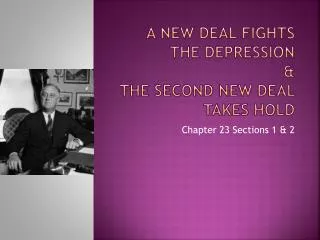
FDR • Wins election in 1932 • 2 term gov. of NY • Reformer with a “can do” attitude • Democrats win majority in house and senate
The 20th Amendment • Roosevelt had to wait 4 months before being inaugurated • Changed the inauguration from March to January • Didn’t apply to Roosevelt
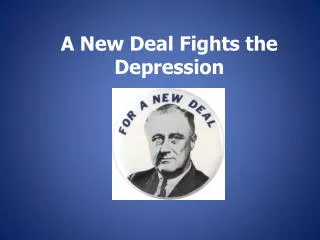
“The Brain Trust” • Professors, lawyers, journalists • Created the “New Deal” • Campaign promise • Relief, Recovery, and Reform
What did they do and why? • Relief –Immediate action taken to halt the economies deterioration. • Recovery - Temporary programs to restart the flow of consumer demand. • Reform -Permanent programs to avoid another depression and insure citizens against economic disasters.
The Hundred Days • March 9 – June 16, 1933 • Congress passed more than 15 major pieces of New Deal legislation • Expanded Government’s role