Download
1 / 1
10 likes | 130 Vues
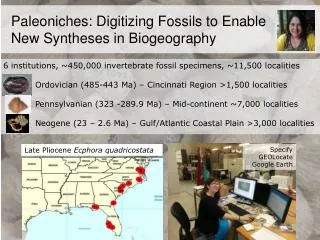
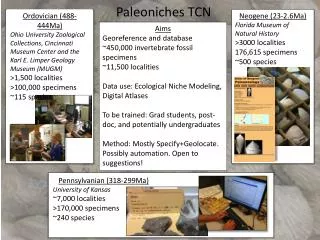
This project focuses on the extensive fossil collections housed in various US museums, including the Ordovician collections at the Ohio University Zoological Collections, the Neogene fossils at the Florida Museum of Natural History, and the Pennsylvanian specimens at the University of Kansas. With over 450,000 invertebrate fossils and data from more than 11,500 localities, we aim to georeference and develop a comprehensive database for ecological niche modeling and digital atlases. The initiative also includes training opportunities for graduate students, post-docs, and undergraduates.

E N D
Paleoniches TCN Ordovician (488-444Ma) Ohio University Zoological Collections, Cincinnati Museum Center and the Karl E. Limper Geology Museum (MUGM) >1,500 localities >100,000 specimens ~115 species Neogene (23-2.6Ma) Florida Museum of Natural History >3000 localities 176,615 specimens ~500 species Aims Georeference and database ~450,000 invertebrate fossil specimens ~11,500 localities Data use: Ecological Niche Modeling, Digital Atlases To be trained: Grad students, post-doc, and potentially undergraduates Method: Mostly Specify+Geolocate. Possibly automation. Open to suggestions! Pennsylvanian (318-299Ma) University of Kansas ~7,000 localities >170,000 specimens ~240 species