Enhancing Cultural Competence in Team Dynamics through Common Agreements
This session aims to boost awareness of the cultural backgrounds of team members and their impact on establishing effective group agreements. Participants will learn to articulate how mental models shape team dynamics and how to promote culturally competent practices. Enhanced knowledge will empower teams to develop common agreements that reflect shared values and behaviors, ensuring clarity in expectations for all members. Topics include team logistics, roles, decision-making, and recognition, fostering an inclusive environment that respects diverse cultures.

Enhancing Cultural Competence in Team Dynamics through Common Agreements
E N D
Presentation Transcript
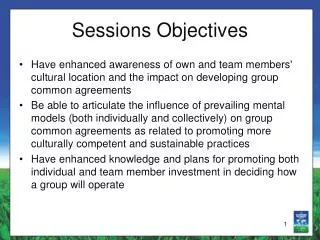
Sessions Objectives • Have enhanced awareness of own and team members' cultural location and the impact on developing group common agreements • Be able to articulate the influence of prevailing mental models (both individually and collectively) on group common agreements as related to promoting more culturally competent and sustainable practices • Have enhanced knowledge and plans for promoting both individual and team member investment in deciding how a group will operate
Culturally Competent Agreements • Culturally competent common agreements usually express the beliefs or desires of the majority of the team and make explicit the behaviors that should or should not take place in team interactions.
Culturally Competent Agreements • Culturally Competent Common Agreements help: • Express the values and desires of team members. • Make sure every team member knows and agrees with what’s expected of him or her. • Support the needs of the team and reflects the diverse culture of the organization's staff and stakeholders. • Evaluate team performance. • Orient new members to team expectations of “how things are done.” 4
Culturally Competent Agreements Below are some common team dynamics for which explicit culturally competent common agreements can be established: • Team meeting logistics and attendance • Team member roles and behavior • Team decision making • Team member rewards and recognition