What is Light?
Light is a form of energy that reaches us from the Sun, traveling through space as electromagnetic waves. While we perceive visible light as white, it is actually a combination of many colors, which can be seen when white light passes through a prism. The visible spectrum includes red, orange, yellow, green, blue, indigo, and violet, each with different energy levels—red light having the least energy and violet light the most. The electromagnetic spectrum encompasses various types of waves, including radio waves and X-rays, each differing in energy.

What is Light?
E N D
Presentation Transcript
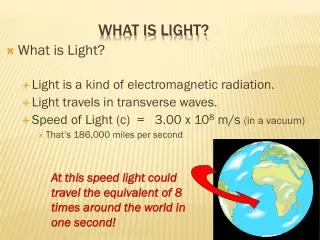
Light Energy • Light is a form of energy • It is one of the many forms of energy that reaches us from the Sun • Energy from the Sun travels through space as electromagnetic waves • An electromagnetic wave is a wave of energy associated with electric and magnetic fields • Electromagnetic waves can pass through a vacuum or through a medium
Visible Light • The light we see when we look at a candle flame, a light bulb, or the Sun is called visible light • Visible light appears to be white • Visible light is actually a combination of all colours • When white light is shone through a prism, it can be separated into its component colours
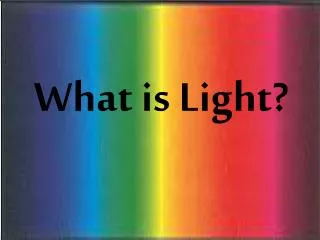
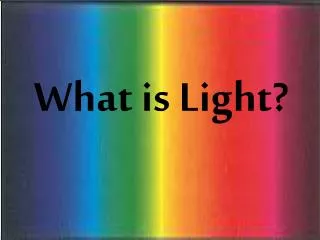
Component Colours of White Light • Red • Orange • Yellow • Green • Blue • Indigo • Violet
The Visible Spectrum • The continuous sequence of colours that together form visible white light is called the visible spectrum • The different colours of light in the visible spectrum have different amounts of energy • Red light has the least energy and violet light has the most energy
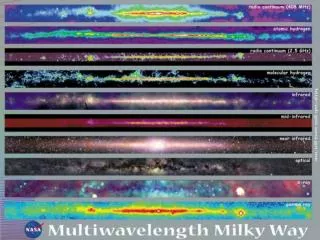
The Electromagnetic Spectrum • Visible light is only one type of energy that travels in the form of electromagnetic waves • There are other invisible electromagnetic waves - radio waves, microwaves, X-rays are some • Each type of electromagnetic wave has a different amount of energy • These types of EM waves are arranged depending on the amount of energy they have - this is called the electromagnetic spectrum