The Fascinating World of Invertebrates: Diversity and Characteristics
Invertebrates are a diverse group of animals that lack a backbone, including worms, mollusks, arthropods, echinoderms, and coelenterates. They exhibit remarkable features such as soft bodies, segmented structures, and the ability to lay eggs. Some invertebrates, like earthworms and leeches, regenerate, while others, including certain types of jellyfish and anemones, possess stinging tentacles. Their unique body structures and adaptive capabilities highlight the complexity of life without a spine, making them essential components of our ecosystems.

The Fascinating World of Invertebrates: Diversity and Characteristics
E N D
Presentation Transcript
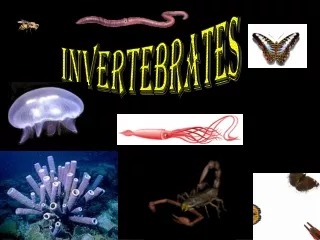
INVERTEBRATES ANIMALS WITHOUT BACKBONES
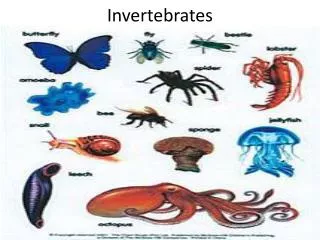
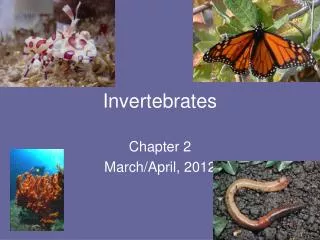
WORMS • Soft bodies • Body divided into segments • Lays eggs • Some Regenerate • Some are parasites
SPONGES • Have a large space in the middle of their bodies • Have holes on the outside of their bodies • No mouth, no organs, no stomach
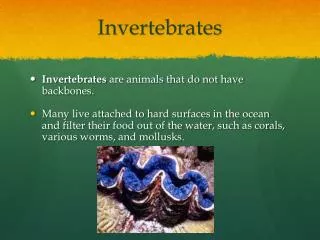
MOLLUSKS • Snails, Clams, Squid, Octopus • Soft Body • Moves by using a soft, muscular foot covered in slime • May or may not have a shell
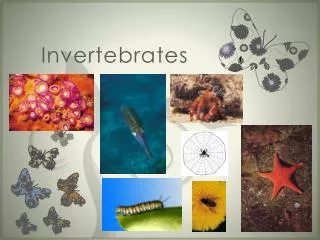
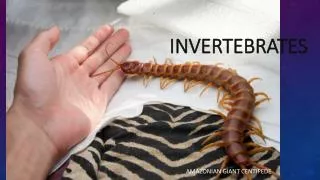
ARTHROPODS • Crabs, Ants, Spiders, Grasshoppers and many other insects • Can have antennae • Separated body parts • Six to ten jointed legs • Has an exoskeleton • Lays eggs • Largest group of invertebrates
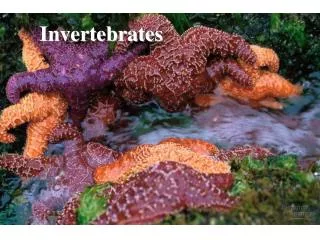
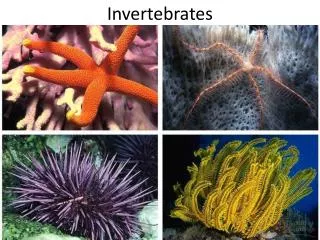
ECHINODERMS • Sea Urchins, starfish, sand dollars • Body parts of all the same size • Have no head or brain • Often have spines all over their bodies • Often called animals with spiny skins • Some can regenerate
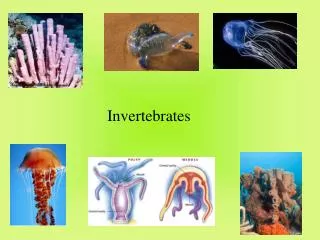
COELENTERATES • Jelly fish, sea anemone, coral • Soft round body • Stinging tentacles