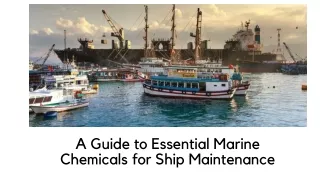
Marine Insulation Maintenance Guide
This Marine Insulation Maintenance Guide provides practical steps for shipowners, operators, and marine maintenance crews to extend insulation life, prevent corrosion, and improve safety and efficiency onboard vessels. It covers common challenges, types of marine insulation, inspection techniques, preventive care tips, and seasonal checklists to ensure IMO and SOLAS compliance. Perfect for anyone looking to reduce operational costs, prevent downtime, and keep vessels running smoothly in harsh marine environments. Visit us!


Marine Insulation Maintenance Guide
E N D
Presentation Transcript
Marine Insulation Maintenance Guide Preventive Care for Long-Term Performance Marine insulation is essential for energy efficiency, crew safety, and equipment protection. It controls temperature, reduces noise, prevents condensation, and limits fire risks. Without proper maintenance, insulation can deteriorate, leading to higher energy costs, corrosion, and safety hazards. This guide provides practical steps to maintain marine insulation for safe, efficient, and compliant operations. Why Maintenance Matters Extends insulation lifespan Prevents energy loss & corrosion Reduces downtime & operational costs Ensures compliance with IMO & SOLAS regulations Enhances fire safety onboard Key Challenges Moisture ingress → Corrosion under insulation (CUI) Vibration & mechanical damage → Cracks & wear Thermal cycling → Expansion & shrinkage issues Salt exposure → Accelerates material breakdown Aging → Loss of performance over time Types of Marine Insulation Mineral Wool / Stone Wool – High fire resistance & acoustic control. Glass Wool – Lightweight, ideal for HVAC and humidity control. Ceramic Fiber – Withstands extreme heat, ideal for exhausts/boilers. Elastomeric Foam – Flexible, moisture-resistant, great for pipes & ducts. Visit us to get more information! www.oceanstar-me.com +971 4 3204636
Marine Insulation Maintenance Guide Preventive Care for Long-Term Performance Preventive Maintenance Steps A. Inspection Techniques Visual Check: Look for cracks, sagging, or damaged cladding. Thermal Imaging: Identify heat loss or wet spots. Moisture Testing: Detect trapped water to prevent corrosion. Thickness Measurement: Ensure material meets safety specs. B. Cleaning & Care Remove salt, oil, and dust regularly. Ensure drainage to prevent water pooling. Replace damaged cladding immediately. Maintenance Tips Wear PPE while handling insulation. Secure loose sections with marine-grade fasteners. Use patch kits for small cuts or tears. Replace waterlogged insulation promptly. Label high-priority inspection zones. Safety Guidelines Shut down nearby systems before work. Use respirators for fibrous insulation. Cut materials safely with containment measures. Dispose of waste per MARPOL regulations. Proper marine insulation care in Dubai ensures safety, efficiency, and compliance. Regular inspections and preventive maintenance reduce costs, prevent failures, and protect lives—helping vessels run smoothly for years to come. www.oceanstar-me.com +971 4 3204636