The Gift of the Nile: Understanding the Birth of Ancient Egypt
170 likes | 275 Vues
Explore the geography, culture, and history of ancient Egypt through this engaging video. Learn how Egyptians farmed and thrived along the Nile River as early as 6000 BC, organizing into nomes, or districts. Discover the unification of Upper and Lower Egypt around 3100 BC by Menes, the first pharaoh, who established a lasting dynasty. The video delves into the significance of pyramids, hieroglyphics, and the divine nature of pharaohs as leaders. Join us in uncovering the legacy of one of history's greatest civilizations.


The Gift of the Nile: Understanding the Birth of Ancient Egypt
E N D
Presentation Transcript
Egypt The Gift of the Nile & the First United Nation
Birth of a Nation • Egyptians lived & farmed along Nile in 6000 BC; organized nearby villages into nomes (districts) • 3200 BC nomes were united into 2 kingdoms: Upper Egypt & Lower Egypt each with different king
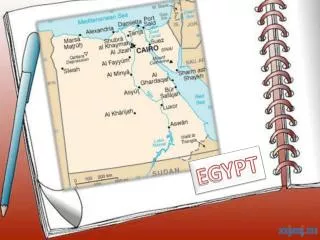
Lower Egypt Upper Egypt Nomes of Ancient Egypt (Nile River is only river in world to flow from south to north. As a result, southern region of Nile was called “Upper Egypt” because elevation was higher than northern “Lower Egypt”)
Lower Egypt Upper Egypt
Birth of a Nation • 3100 BC—Menes united Upper & Lower Egypt, became first pharaoh (king god) • Built new Egyptian capital at Memphis • Egypt dynasties would survive 2,800 years
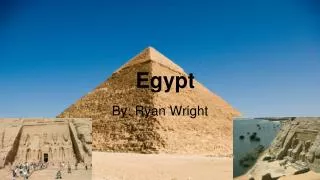
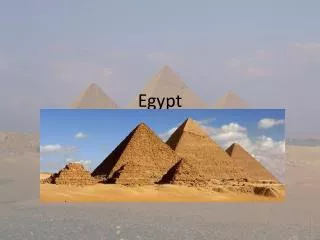
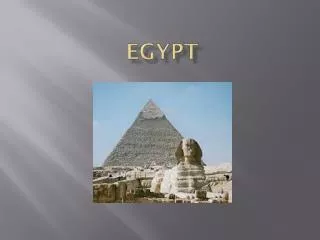
Egyptian Culture • Pharaohs were more than kings, they were also thought of as equals to gods & religious figures • To honor pharaohs, built pyramids or other tombs so pharaoh could live & rule forever, even after death
Egyptian Culture • Egyptian writing was called hieroglyphics
Hieroglyphics (Type A) Hieroglyphics (Type B) Greek
Egyptian villages were organized into districts called ____. Who united Upper & Lower Egypt? Egypt Quiz Menes Nomes
Why were pharaohs more powerful than kings in Mesopotamia? What purpose did pyramids serve? Egypt Quiz Tombs for pharaohs so they could reign in afterlife Pharaohs were kings, gods, & religious leaders
How is Egypt similar to Mesopotamia? How is Egypt different from Mesopotamia? Egypt Quiz