Vulnerability
Explore the intricate interplay of family, accountability, and divine purpose as illustrated through biblical narratives. Discover how figures like Noah and Abigail faced personal and collective responsibilities within their households, showcasing the impact of individual actions on family destinies. Delve into themes of righteousness and moral courage in the face of adversity, emphasizing that each person must give an account to God for their choices. Join us in reflecting on how vulnerability can shape our paths and influence the lives of those we love.

Vulnerability
E N D
Presentation Transcript
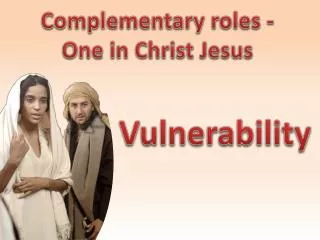
Complementary roles - One in Christ Jesus Vulnerability
A Family destiny? But with thee will I establish my covenant; and thou shalt come into the ark, thou, and thy sons, and thy wife, and thy sons’ wives with thee. Gen 6:18 And Yahweh said unto Noah, Come thou and all thy house into the ark; for thee have I seen righteous before me in this generation. Gen 7:1
A Family destiny? …and Dathan and Abiram came out, and stood in the door of their tents, and their wives, and their sons, and their little children.… And it came to pass, as he had made an end of speaking all these words, that the ground clave asunder that was under them: And the earth opened her mouth, and swallowed them up, and their houses, Numb 16:27-31
Personal accountability • Ro 14:12 So then every one of us shall give account of himself to God. • Ezek 18 v. 20 The soul that sinneth, it shall die. The son shall not bear the iniquity of the father, neither shall the father bear the iniquity of the son: the righteousness of the righteous shall be upon him, and the wickedness of the wicked shall be upon him. • Isa 3:10 Say ye to the righteous, that it shall be well with him: for they shall eat the fruit of their doings. • Isa 3:11 Woe unto the wicked! it shall be ill with him: for the reward of his hands shall be given him
Do I speak up? Abigail’s Dilemma • Her husbands folly was about to cause other people (David) to sin, which would have compromised Gods plan and purpose, and led David to later lasting regret. • Her husbands folly meant that her whole household was at risk – innocent people’s lives were at risk • Her husbands folly was publicly known anyway (and commented on) • Divine principles had been breached and sins needed to be acknowledged. She was morally compromised and felt she had to act – “upon me let this iniquity be.” • Wrongs done to other people had to be put right (in provision of food).