Fruit Classifications
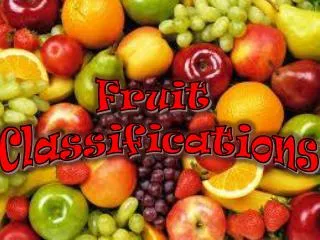
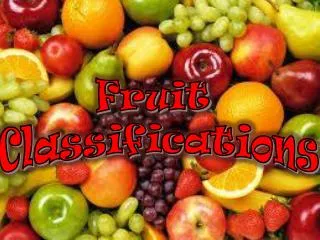
Explore the diverse world of fruit classifications including pomes, drupes, berries, citrus, melons, and tropical fruits. Pomes have smooth skin with a fleshy core (e.g., apples, pears), while drupes contain a single seed surrounded by juicy flesh (e.g., peaches, cherries). Berries feature tiny embedded seeds (e.g., strawberries, grapes), and citrus fruits are known for their thick rinds and vitamin C content (e.g., oranges, lemons). We also cover storage tips, ripening processes, and nutritional information to maximize your fruit experience.

Fruit Classifications
E N D
Presentation Transcript
Fruit Classifications
Pomes • Characterized by a smooth skin covering an enlarged fleshy area surrounding the core (seeds). • Examples: -apples -pears -applepear
Drupes • Contain a single seed, or the pit, surrounded by a fleshy, juicy, edible portion. • Examples: -Peaches -Nectarines -Apricots -Cherries -Plums
Berries • Berries have tiny seeds embedded in the flesh and a fragile cell structure. • Examples: -Blackberries -Cranberries -Strawberries -Grapes
Citrus Fruits • Citrus fruits have a thick outer rind and a thin membrane that separates the flesh of the fruit into segments. • Good source of vitamin C Examples: • Grapefruit, orange, tangerine, tangelo, kumquat, lemon, lime, mandarin orange, ugli fruit
Melons • Melons are large, juicy fruits with a thick skin and many seeds. Examples: -Watermelon -Cantaloupe -Honeydew -Casaba -Muskmelon
Tropical Fruits • Tropical fruits are grown in warm climates and are considered to be somewhat exotic. • Examples: • Banana • Plantain • Mango • Papaya • Pomegranate • Avocado • Pineapple • Kiwi
Won’t ripen after harvest Apples Berries Grapefruit Oranges Pineapples Tangerines Will ripen after harvest Apricots Avocados Bananas Kiwi Mangoes Nectarines Peaches Pears Which fruits ripen?
Nutritional Information • Vitamins and fiber. • Citrus fruits are the best source of vitamin C. • Cantaloupe, apricots, and other yellow fruits are good sources of vitamin A =contain carotene.
Canned Fruits/Juices • Canned fruits come packed in juices or in light, heavy, or extra heavy syrups. • Juices come in bottles, cartons, cans, or frozen concentrate • If label says “juice” the product =100%juice • If not pure juice must be called another name “fruit drink”
Frozen Fruits • Frozen fruits are similar in color and flavor to fresh fruits, but may lose some texture qualities during freezing. • Store in the coldest part of the freezer • Don’t refreeze
Fruit Sauces • Goal=break down texture • Sugar isn’t added until end of cooking • This thins sauce • When cooking in water use as little water as possible • Prevents loss of flavor and water soluble nutrients
Storing Fruits • Most fruits are stored in the crisper drawer in the refrigerator • Citrus and pomes last longer than berries and melons • To speed up the ripening process, store fruits at room temperature in a brown paper bag