Excretory (urinary) System
The excretory (urinary) system plays a crucial role in maintaining the body's internal balance by collecting and expelling waste produced by cells. This system includes the kidneys, ureters, urinary bladder, and urethra, responsible for eliminating urea, water, and other waste products. Nephrons filter out wastes and reabsorb essential materials like glucose. Excretion not only removes harmful substances but also contributes to homeostasis, ensuring a stable internal environment. Other organs involved in excretion include the lungs, skin, and liver.


Excretory (urinary) System
E N D
Presentation Transcript
Excretory (urinary) System Mrs. Wharton’s Science Class
Functions of the Excretory System • System of the body that collects wastes produced by cells and removes the wastes from the body. • Excretion- what the removal process is called. The structures of the excretory system that eliminate urea, water, and other wastes include the kidneys, ureters, urinary bladder, and urethra
Vocabulary • Kidneys- remove urea and other waste material from blood. • Urine- a watery fluid that contain urea and other wastes • Urea- a chemical that comes from the breakdown of proteins • Ureters- narrow tubes where urine flows from the kidneys • Urinary bladder- where urine is carried to ( stores urine) • Urethra- where urine flows going to the outside world
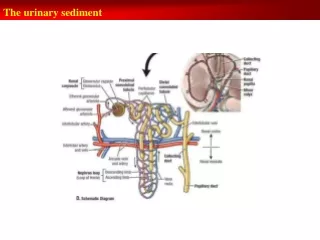
Nephrons • They filter wastes. 1st- both wastes and needed material, such as glucose, are filtered out of the blood. • Then- much of the needed materials is returned to the blood, and the wastes are eliminated from the body.
Homeostasis • Excretion maintains homeostasis by keeping the body’s internal environment stable and free of harmful levels of chemicals. • In addition to the kidneys, organs of excretion that maintain homeostasis include lungs, skin and liver.