Understanding Number Sets and Properties in Mathematics
This guide explores fundamental concepts in mathematics, focusing on number sets and properties. It explains what a set is, the notion of elements, subsets, and includes a breakdown of different types of number sets such as natural numbers, integers, rational, and irrational numbers. The document outlines essential set operations, including union and intersection, and provides clear definitions of mathematical terms like sum, difference, product, and quotient. Furthermore, it emphasizes grading criteria for homework completion to ensure clarity in assessments.

Understanding Number Sets and Properties in Mathematics
E N D
Presentation Transcript
Material Taken From:Mathematicsfor the international student Mathematical Studies SLMal Coad, Glen Whiffen, John Owen, Robert Haese, Sandra Haese and Mark BruceHaese and Haese Publications, 2004
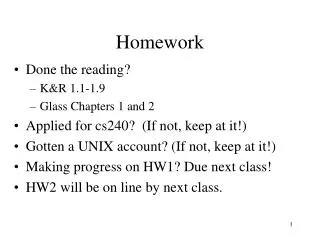
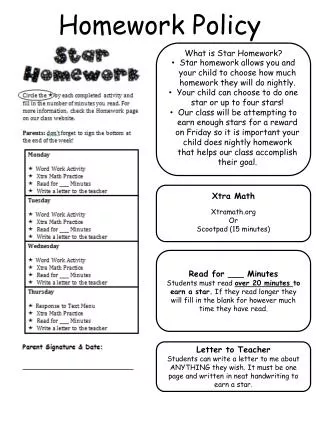
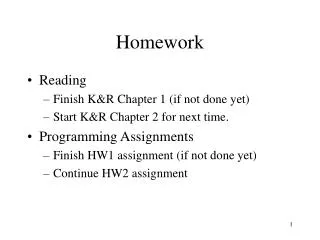
Homework Policy • Late homework will notbe accepted • Graded • in one standard • If based on completion… • 100% complete = 6 • 80%-99% complete = 5 • 60%-79% complete = 4 • 40%-59% complete = 3 • 20%-39% complete = 2 • 0%-19% complete = 0
Chapter 1 Number Sets and Properties Wednesday, Aug 18th - Sections ABC Friday, Aug 20th – Sections DEF Tuesday, Aug 24th – Section G and Review Thursday, Aug 26th – Chapter 1 Quiz
Section A – Some Set Language • A set is a collection of numbers or objects. - If A = {1, 2, 3, 4, 5} then A is a set that contains those numbers. • An element is a member of a set. - 1,2,3,4 and 5 are all elements of A. - means ‘is an element of’ hence 4 A. - means ‘is not an element of’ hence 7 A. - means ‘the empty set’ or a set that contains no elements.
Subsets • If P and Q are sets then: • P Q means ‘P is a subset of Q’. • Therefore every element in P is also an element in Q. For Example: {1, 2, 3} {1, 2, 3, 4, 5} or {a, c, e} {a, b, c, d, e}
Union and Intersection • P Q is the union of sets P and Q meaning all elements which are in P or Q. • P ∩ Q is the intersection of P and Q meaning all elements that are in both P and Q. A = {2, 3, 4, 5} and B = {2, 4, 6} A B = A ∩ B =
M = {2, 3, 5, 7, 8, 9} and N = {3, 4, 6, 9, 10} • Is: • M N ? • {9, 6, 3} N? • True or False? • 4 M • 6 M • List: • M ∩ N • M N
Section B – Number Sets Reals Rationals (fractions; decimals that repeat or terminate) Irrationals (no fractions; decimals that don’t repeat or terminate) Integers (…, -2, -1, 0, 1, 2, …) Natural (0, 1, 2, …) Counting (1, 2, …) + *
Section B – Number Sets • N* = {1, 2, 3, 4, …} is the set of all counting numbers. • N = {0, 1, 2, 3, 4, …} is the set of all natural numbers. • Z = {0, + 1, + 2, + 3, …} is the set of all integers. • Z+ = {1, 2, 3, 4, …} is the set of all positive numbers. • Z- = {-1, -2, -3, -4, …} is the set of all negative numbers. • Q = { p / q where p and q are integers and q ≠ 0} is the set of all rational numbers. • R = {real numbers} is the set of all real numbers. All numbers that can be placed on a number line.
Show that 0.45 is rational. • Show that 0.88888888… is rational.
Section C – Words Used in Mathematics • Sum = • Difference = • Product = • Quotient = • Terms = numbers being added or subtracted • Factors = numbers that divide exactly into another number • Divisor = the number by which we divide • Dividend = the number being divided Note: product and quotient can also refer to the result as well as the action.