The Role of Selenium: Benefits, Needs, and Supplementation in Athletes
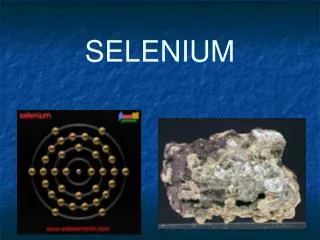
Selenium is an essential trace element known for its critical role in various bodily functions, including DNA synthesis, thyroid hormone metabolism, and reproduction. It serves as a cofactor for the antioxidant enzyme glutathione peroxidase (GSH-Px), which protects against oxidative damage and free radicals. Despite its importance, selenium deficiency is rare, and most athletes may not require supplementation when adequate dietary intake is met. This review explores the relationship between selenium, exercise, antioxidant activity, and the necessity of supplementation, especially in high-performance athletes.

The Role of Selenium: Benefits, Needs, and Supplementation in Athletes
E N D
Presentation Transcript
Should Selenium Sell? SherilMarek KINE 628 Summer 2013
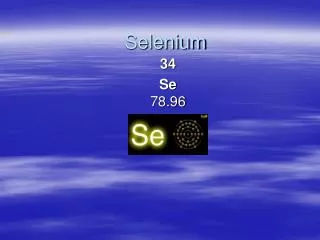
What is Selenium? • Essential trace element • Selenoproteins play a critical role: • Reproduction • Thyroid hormone metabolism • DNA synthesis • Protection from oxidative damage and infection • Best known for role in glutathione peroxidase (GSH-Px) enzyme system
Free radicals and Oxidative Stress • Reactive Oxygen Species (ROS) • Chemically reactive molecules containing O2 • Superoxide anion, peroxide, hydroxyl radical • ROS form as a natural byproduct of cellular metabolism • Environmental stress ROS levels can increase dramatically • Exercise • Combine with molecules such as DNA, fats, and proteins, converting them into free radicals that continue to react (chain-reaction) • Oxidative damage (stress)
GSH-Px enzyme system Interaction • Antioxidants act as a defense system against free radicals
Soleus (Type 1) 55% VO2max 65% VO2max GSH-Px and Exercise 75% VO2max Red Gastrocnemius (Type IIa) White Gastrocnemius (Type IIb) Powers et al. 1994
Question? • Since GSH-Px activity is increased, is there an increased need for more selenium?
Determining Selenium Status Margaritiset al. 1995
Question? • Since plasma and erythrocyte GSH-Px activity has been shown to reach a plateau at certain plasma SE concentrations, is supplementation beneficial?
Selenium Supplementation • With supplementation, limited evidence showing (1) • Decreases in oxidative stress • Improvements in antioxidant levels • Most research shows no significant benefits of supplementation (4) • The RDA is based on the maximization of GPx activity • “More is not necessarily better”- Dr. Riechman • Adequate amounts in diet and status not compromised by routine exercise training • Research in its infancy…
NIH RDA and Food Sources
Selenium Deficiency and Toxicity • Deficiencies • Keshan Disease- viral cardiomyopathy • Kashin-Beck’s Disease- osteoarthritis • Thyroid Disease • Cognitive decline • Muscle pain and weakness • Toxicity • Hair and nail brittleness • Myocardial infarction • Muscle tenderness • GI distress • Respiratory distress
Take Home Message • Selenium is a cofactor for a major antioxidant enzyme system • Glutathione Peroxidase enzyme system • Inhibitory effects on muscle damage • Assistance of antioxidant function • Role in prevention of fatigue • Aid in recovery from exhaustive exercise • DOMS • Selenium deficiencies are rare • Athletes do not need selenium supplementation • Food First!
References • Dragan I, Dinu V, Cristea E, Mohora M, Ploesteanu E, Stroescu V. Studies regarding the antioxidant effect of selenium on top swimmers. Rev Roum Physiol. 1990; 27:15-20. • Margaritis I, Rousseau A, Hininger I, Palazzetti S, Arnaud J, Roussel A. Increase in selenium requirements with physical activity loads in well-trained athletes is not linear. Biofactors23(2005) 45-55. • Powers SK, Criswell D, Lawler J, J LL. Martin D, Herb RA, Dudley G. Influence of exercise and fiber type on antioxidant enzyme activity in rat skeletal muscle. Am J PhysiolRegulIntegr Comp PhysiolFebruary 1, 1994 266:(2) R375-R380 • Tessier F, Margaritis I, Richard MJ, Moynot C, Marconnet P. Selenium and training effects on the glutathione system and aerobic performance. Med Sci Sports Exerc. 1995 Mar;27(3):390-6.