Download
1 / 20
200 likes | 300 Vues
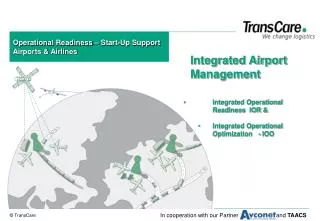
The Instrument of Opportunity (IOO) serves as a "passenger seat" on the Earth's GOES satellites, offering a flexible platform for various scientific instruments from 1994 onwards. It has faced challenges in securing payloads, with past candidates including Lightning Mapper Sensors and Volcanic Cameras. The IOO provides continuous 24/7 monitoring, addressing unpredictable conditions and enhancing response capabilities for environmental hazards. Future considerations for GOES-R and beyond are outlined, aimed at harnessing new technologies and meeting evolving scientific requirements.

E N D
GOES Instrument of Opportunity(IOO or IoO) Dennis Chesters NASA-GSFC 22 May 2001
IOO described • The Instrument of Opportunity is a modest "passenger seat" on the Earth-facing side of the GOES satellites (not for microwave sounding) • IOO slots on GOES-I/M (1994-2001) and GOES-N/Q (2003-2008) • No takers • Last chance on GOES-P/Q (if a Q) • What about an IOO on GOES-R and beyond (2010+)? IOO on GOES-R, Dennis Chesters NASA-GSFC
IOO interface on GOES-N/Q • IOO IRD • "Interface Requirements Document for Geostationary Operational Environmental Satellites (GOES) N-Q Instrument(s) of Opportunity", Revision A, Feb. 1999, HSC 98091RP/Databank GA27082, 76 pages. • 100 x 60 x 40 cm box on optical bench • 50 x 50 cm aperture - 100's meter visible resolution • No dark face for cryo-cooling - poor thermal IR • 35 + 15 kg (box + externals) • 150 watts (250 watt option) • Semi-annual N-S flip - point or full disk • Multi-use Data Link to Wallops - must get data from there • 100 kilobits/sec (680 kbps option) - data rate limited! IOO on GOES-R, Dennis Chesters NASA-GSFC
IOO location on GOES-N/Q IOO on GOES-R, Dennis Chesters NASA-GSFC
IOO dimensions on GOES-N/Q IOO on GOES-R, Dennis Chesters NASA-GSFC
The IOO advantage • Continuous 24/7/365 observations • Unpredictable conditions and events • On-demand observations • Diurnal cycles • Supplement LEO • Responsive to new requirements • Prove new technology IOO on GOES-R, Dennis Chesters NASA-GSFC
IOO targets • Lightning • Volcanoes - ash & vapor • Ozone • Clouds & aerosols • Fires & smoke • Ocean color & coastal conditions • Event-of-the-day IOO on GOES-R, Dennis Chesters NASA-GSFC
Previous IOO candidates • Lightning Mapper Sensor (LMS) • Volcanic Camera (VolCam) • Special Events Imager (SEI) • High Definition Television (HDTV) IOO on GOES-R, Dennis Chesters NASA-GSFC
Lightning Mapper Sensor (LMS) • Detects lightning-flash oxygen, day & night • Associated with strong updrafts within severe storms - NWS value • Well demonstrated in LEO • Championed by Hugh Christian and Steve Goodman at NASA-MSFC IOO on GOES-R, Dennis Chesters NASA-GSFC
LMS view GOES-WEST (10 km, 1 min resolution) GOES-EAST IOO on GOES-R, Dennis Chesters NASA-GSFC
Volcanic Camera (VolCam) • Detects ozone, ash ,dust, smoke & SO2 by solar absorption in multiple shortwave bands • maybe 11/12 micron split window for night, too • Hazard detection - FAA value • Well demonstrated in LEO • Championed by Arlin Kueger at NASA-GSFC (now at UMBC-JCET) • Uncooled microbolometers suggested, too IOO on GOES-R, Dennis Chesters NASA-GSFC
VolCam view 10 km, 15 min resolution (5 min local refresh) St Helens SO2 cloud one day after eruption. IOO on GOES-R, Dennis Chesters NASA-GSFC
Special Events Imager (SEI) • Detects ocean & coastal water color, NDVI, clouds & aerosols with multi-spectral color • Ocean science & hazards - NOAA & NASA value • Similar to LEO instruments • Championed by Wayne Esaias (NASA-GSFC) & Chris Brown (NOAA-NESDIS) • Combo with VolCam suggested, too IOO on GOES-R, Dennis Chesters NASA-GSFC
SEI view 300 m, 10 min resolution, 300 km FOV IOO on GOES-R, Dennis Chesters NASA-GSFC
High Definition Television (HDTV) • Space-qualified HDTV color camera • Event-of-the-day - FEMA, CNN, Weather Channel value • Similar to HDTV cameras on Shuttle, Space Station & AVStar (Malin) • Championed by Malcomb LeCompte (Astrovision) - will fly independently in 2003 & 2005 IOO on GOES-R, Dennis Chesters NASA-GSFC
HDTV view 10 km, 5 min resolution on GOES, full disk 1 km, 1 min resolution on AVStar, mesoscale FOV IOO on GOES-R, Dennis Chesters NASA-GSFC
IOO lessons learned • Good values for science & society • Interested parties • Ready technology • Programmatic Difficulties • Time • Money • Data Rate IOO on GOES-R, Dennis Chesters NASA-GSFC
IOO GOES program requirements • Value to NOAA & NOAA approval • Fit in allocation constraints • Data rate! • Independently funded • Instrument • Accommodation costs! • Testing • Meet launch schedule • Deliver 2 years early! • No risk to mission schedule or operations IOO on GOES-R, Dennis Chesters NASA-GSFC
IOO schedule - GOES-P example • 2001 - win proposal, get NOAA approval • 2002 - funding, contract mods, design IOO • 2003 - build instrument, deliver test plan • 2004 - deliver flight model IOO • 2005 - pre-launch tests • 2006 - GOES-P launch readiness • 2007 - GOES-P launch & post-launch testing • 2008 - on-orbit storage • 2009 - GOES-P operations begin at TBD station IOO on GOES-R, Dennis Chesters NASA-GSFC
IOO on GOES-R • Decide: IOO slot on GOES-R and beyond? • How to make better use of the IOO slot? • Arrange for an IOO series on GOES-R and beyond • 2003 - mission plan • 2004 - proposals • 2005 - awards • 2010 - launch IOO#1 on GOES-R • 2012 - launch IOO#2 on GOES-S • Minimize the programmatic problems • NASA-supplied R&D instruments • GOES-supplied accommodation • Independent high-rate downlink (e.g Ka-band replaces MDL) • Use the IOO to enable operational improvements IOO on GOES-R, Dennis Chesters NASA-GSFC