Download
1 / 5
50 likes | 178 Vues
Proper boiler standby storage is crucial for extending the life of your boiler and preventing corrosion during offline periods. This guide explains protective methods like wet and dry storage, emphasizing that shutting down the boiler without proper care can lead to costly issues. Wet storage requires low maintenance and is ideal for short durations, while dry storage offers better long-term protection. Learn the necessary steps for each method to ensure your boiler remains ready for operation, even during cold snaps, with crucial maintenance tips outlined for each technique.

E N D
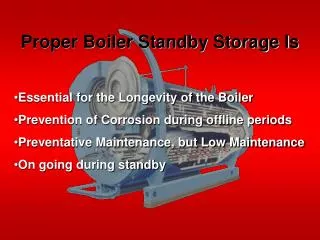
Proper Boiler Standby Storage Is • Essential for the Longevity of the Boiler • Prevention of Corrosion during offline periods • Preventative Maintenance, but Low Maintenance • On going during standby
Proper Boiler Standby Storage Is NOT • Shutting off the boiler at the end of winter • Draining the boiler • Something that is forgotten once started • Costly or Time Consuming
Why Wet Store? • Prevent Corrosion • Easier then dry method • Better for short storage period • Quicker startup • Boiler always ready for cold snap • Why Dry Store? • Prevent Corrosion • More protection then wet method • Better for long storage period • No need to fire boiler during storage
Wet Storagethe Technique Wet Storagethe Technique • Reduce treatment levels and blowdown heavily 2 days prior • Increase bottom blowdown to remove mud • Cool and drain, then wash down and refill (optional) • Fill boiler to header • Add oxygen scavenger, phosphate and alkalinity booster • Fire boiler at low fire until steam begins to form • Close header • Fire boiler every 4 to 6 weeks to keep chemicals mixed and active
Dry Storagethe Technique • Reduce treatment levels and blowdown heavily 2 days prior • Increase bottom blowdown to remove mud • Cool and drain, then wash down • Open all drain plugs and inspection ports • Close heater and feedwater valves • Using a fan circulate air through boiler to completely dry • Place trays of desiccate at 10# per 1000 gallons of volume • Seal all drain plugs and inspection ports