Download
1 / 17
170 likes | 307 Vues
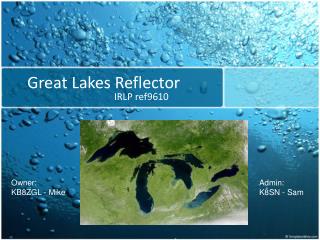
The Great Lakes, forming approximately 500,000 years ago and achieving their current shape around 10,000 years ago, host the largest surface freshwater system on Earth. Covering a watershed area of 196,000 square miles, they support 34 million residents across the U.S. and Canada. The lakes face significant environmental challenges, including invasive species, pollution, urban sprawl, and the effects of climate change. Lake Erie, the smallest in volume, is notable for its warm waters and productive fisheries, but it is also home to rare and endangered fish species, highlighting the urgent need for sustainable stewardship.

E N D
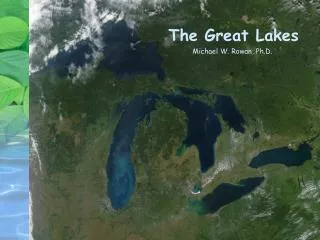
The Great Lakes Michael W. Rowan, Ph.D.
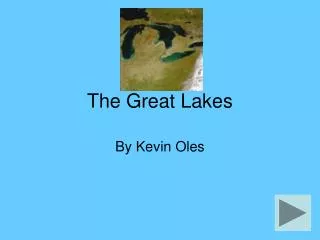
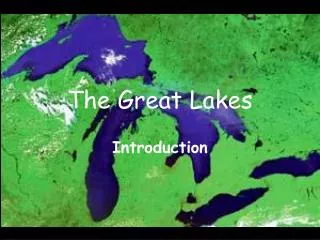
The Great Lakes • Began to form ~500,000 years ago • Took present shape ~10,000 years ago • Watershed area = 196,000 sq. miles • 34 million people (27.5 million U.S., 6.4 million Canada) • Water surface area = 94,700 sq. miles • U.S. Great Lakes shoreline > U.S. east coast shoreline
Unique ecosystem, and unique resources • Largest surface freshwater system on earth • Contains 84% of North America’s surface freshwater • Contains 21% of the world’s surface freshwater
Great Lakes Environmental Issues • Invasive species • Nonpoint source pollution • Urban sprawl • Mercury in fish • Contaminated sediments (dredging?) • Nutrient loading • Water diversion • Climate change • Endocrine disrupters • Atmospheric deposition
Erie – Our Great Lake • Smallest in volume, depth, retention time, watershed area • Largest human population • Warmest, most nutrient-rich, and most productive • Fishery is more productive than the fisheries of other four Great Lakes combined • Largest percentage of land in agriculture
Cuyahoga River Fire November 1952
Brown Bullhead (Ameiurus nebulosus) • Ubiquitous benthic catfish distributed throughout the great lakes • Vulnerable to many hydrophobic contaminants (PAHs) • Sediment PAHs linked to high tumor rates and changes in blood variables
BROWN BULLHEAD (Ameiurus nebulosus) Tri-C Eastern Campus BIO 2806 - Environmental Science for Educators: Promoting Watershed Stewardship July 2007
Tri-C Eastern Campus BIO 2806 - Environmental Science for Educators: Promoting Watershed Stewardship July 2008
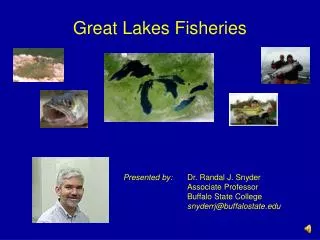
Something Fishy • 34 species of Lake Erie Fish are rare, threatened, or endangered • Blue pike – extinct • Lake sturgeon, brook trout, lake trout, . . . • Fish consumption advisories due to mercury and PCBs
CREDITS • Thanks to Michael Rowan, PhD from Tri-C East who donated his Power Point slides so graciously. • Course: “Promoting Watershed Stewardship” for Environmental Science Educators
Educator Resources • Great Lakes Environmental Atlas - USEPA • Great Lakes science activities – OSU/Ohio Sea Grant • NASA - Visible Earth – satellite images of the Great Lakes • Animation: lake effect snow • Great Lakes Commission • International Joint Commisison • Great Lakes Information Network • Lake Erie: Beyond the Surface -Channel 3