Download
1 / 3
30 likes | 186 Vues
This session discusses the implications of radiation exposure from the Fukushima disaster on thyroid cancer incidence. Key findings indicate a rising global incidence of thyroid cancer over the past 30 years, particularly among young children exposed during the Chernobyl accident. Most Fukushima residents received low radiation doses, yet thyroid cancer cases surged, likely due to screening practices. Effective treatment options exist for advanced thyroid cancer stages. The session emphasizes the importance of local risk communication and proposes strengthening the Fukushima Health Management Survey and establishing a cancer registry.

E N D
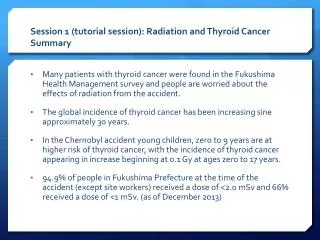
Session 1 (tutorial session): Radiation and Thyroid CancerSummary • Many patients with thyroid cancer were found in the Fukushima Health Management survey and people are worried about the effects of radiation from the accident. • The global incidence of thyroid cancer has been increasing sine approximately 30 years. • In the Chernobyl accident young children, zero to 9 years are at higher risk of thyroid cancer, with the incidence of thyroid cancer appearing in increase beginning at 0.1 Gy at ages zero to 17 years. • 94.9% of people in Fukushima Prefecture at the time of the accident (except site workers) received a dose of <2.0 mSv and 66% received a dose of <1 mSv. (as of December 2013)
Session 1 (tutorial session): Radiation and Thyroid CancerSummary - Continued • Even advanced stages of thyroid cancer after radiation exposure can be treated effectively with surgery, radioidine therapy and thyroid hormone supplements. • The current high prevalence of in thyroid cancer recently found in Fukushima Prefecture is highly likely attributable to screening. • Thyroid canceroccuranceis influenced by: • Change in risk factors • Change in diagnosis and detection • Methodology considerations
Session 1 (tutorial session): Radiation and Thyroid CancerSummary - Continued • Perception by stakeholders is everything. • Risk communications and dialogue is better locally oriented than centrally managed. Recommendations – • Continue and strengthen the Fukushima Health Management Survey. • Develop a population based Cancer Registry. • Enable linkage of data over time and end-points. • Implement a Primary Prevention Program. • Use of observation, for low risk papillary patients was found to be an effective treatment therapy. • Establish an effective, locally based Risk Communications Program.