Understanding Kidney Functions: Homeostasis, Urine Production, and Hormones
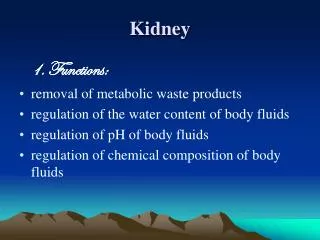
The kidneys are essential paired organs primarily responsible for urine production, found in many animals, including vertebrates and some invertebrates. As crucial components of the urinary system, they also perform vital secondary functions such as regulating electrolytes, maintaining acid-base balance, and controlling blood pressure. While excreting waste products like urea and ammonium, kidneys reabsorb essential substances including glucose and amino acids. Additionally, they play a significant role in hormone production, including vitamin D, renin, and erythropoietin, contributing to overall homeostasis.

Understanding Kidney Functions: Homeostasis, Urine Production, and Hormones
E N D
Presentation Transcript
The kidneys are paired organs, which have the production of urine as their primary function. Kidneys are seen in many types of animals, including vertebrates and some invertebrates. They are part of the urinary system, but have several secondary functions concerned with homeostatic functions. These include the regulation of electrolytes, acid-base balance, and blood pressure. In producing urine, the kidneys excrete wastes such as urea and ammonium; the kidneys also are responsible for the reabsorption of glucose and amino acids. Finally, the kidneys are important in the production of hormones including vitamin D, renin and erythropoietin.