
Mary Warren: The Real Catalyst of the Salem Witch Trials

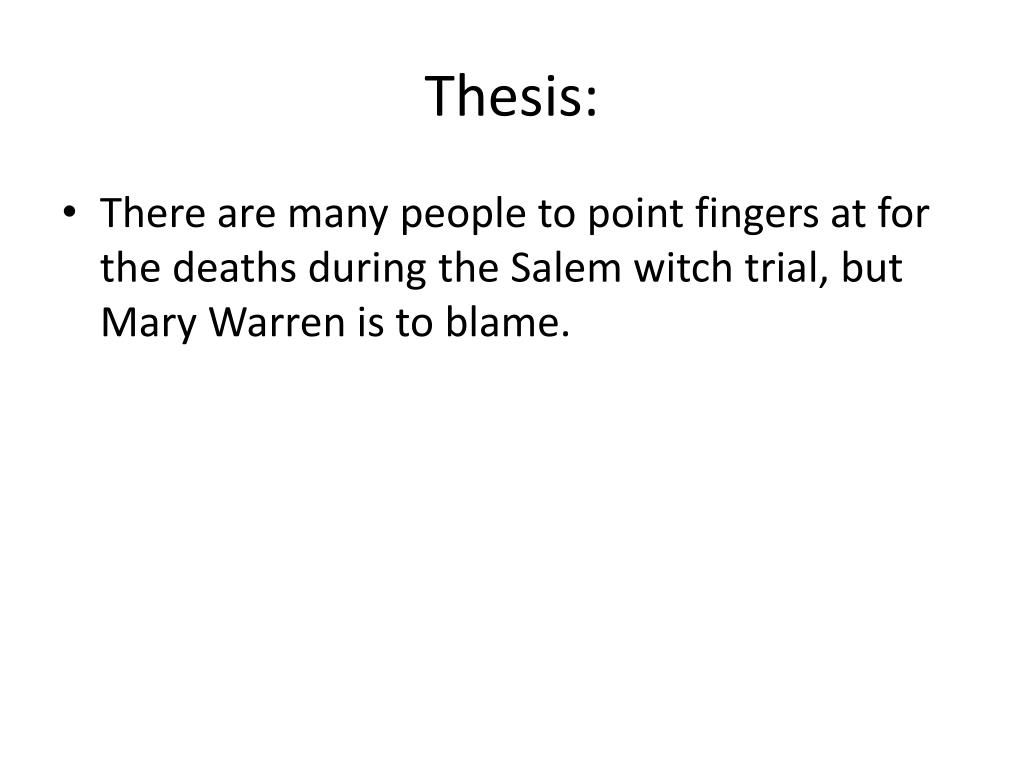
In Arthur Miller's "The Crucible," while many characters contribute to the hysteria of the Salem Witch Trials, Mary Warren's actions stand out as particularly culpable. Living with the Proctors, she had intimate knowledge of the truth yet chose to betray them, ultimately condemning John Proctor to death. Her failure to speak up and her cowardly accusations highlight her pivotal role in the tragic events. This analysis argues that Mary Warren's choices not only devastate individual lives but also illuminate the broader themes of fear and betrayal that permeate the play.
Télécharger la présentation 
Politique de téléchargement : le contenu du site vous est fourni TEL QUEL pour votre information et votre usage personnel ; il ne peut être vendu, concédé sous licence ni partagé sur d’autres sites sans l’accord de son auteur.Le contenu vous est fourni TEL QUEL, pour votre information et votre usage personnel uniquement. Téléchargez la présentation en cliquant sur ce lien. Lors du téléchargement, si vous ne parvenez pas à télécharger une présentation, l’éditeur a peut-être supprimé le fichier de son serveur.Pendant le téléchargement, si vous ne parvenez pas à obtenir une présentation, le fichier a peut-être été supprimé par l’éditeur.
F I N