Download
1 / 6
70 likes | 220 Vues
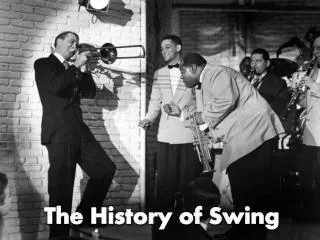
Swing music and dance, originating in the 1840s from minstrel shows, peaked from 1885 to 1905 and continued until the late 1920s. Originally known as the Chalk Line Walk, it featured elaborate routines and high-stepping Charleston moves. The style evolved in 1903 and gained popularity in 1923 with ragtime jazz in a quick 4/4 time signature. The late 1920s saw the invention of the Lindy Hop at the Savoy Ballroom, a style known for its breakaway dancing and fancy footwork. The 1930s introduced the Jitterbug, a bouncy six-beat variant of swing.

E N D
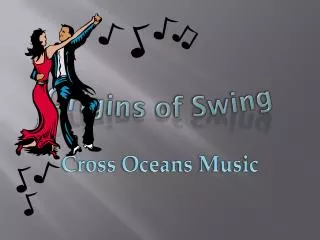
Origins of Swing Cross Oceans Music
Cakewalk • Roots in Minstrel Shows in 1840’s • Peaked from 1885-1905 • Lasted Until Late 1920’s • Originally Known as Chalk Line Walk • Elaborate & Stylized Routines • Exaggerated High-Stepping
Charleston • Originated in 1903 • Became Popular in 1923 • Music is Ragtime Jazz • Quick 4/4 Time • Syncopated Rhythms
Lindy Hop • “Invented” in Late 1920’s • Began at the Savoy Ballroom • “Breakaway” Dancing • Fancy Footwork • Named for Charles Lindbergh
Boogie Woogie • Also Called Honky Tonk • Began in 1920’s • Fast Paced Blues Structure • Driving & Repetitive Beat • “Eight-to-the-Bar”
Jitterbug • Began in the 1930’s • Bouncy Six-Beat Variant • Used Interchangeably With: • Lindy Hop • Lindy • Swing