Circulatory systems
This overview explores the evolution and function of circulatory systems in both animals and plants. It examines primitive transport mechanisms like diffusion, the transition to true circulatory systems in eucoelomates, and the characteristics of open and closed systems. Key elements include the role of the heart, types of blood cells, and the cardiovascular network in animals, as well as the development of vascular tissues in plants for efficient nutrient and water transport. Understanding these systems highlights their complexity and importance in supporting life.

Circulatory systems
E N D
Presentation Transcript
Circulatory systems Biology 2: Form and Function
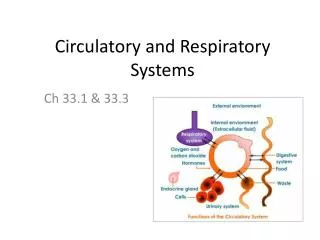
Circulation • Transport of • Nutrients • Metabolic wastes • Metabolic gases • Various elements of immunological system • Hormonal signals • Heat energy
The evolution of circulation in animals • Primitive animals rely upon diffusion as a mechanism of transport (Porifera, Cnidaria) • Diffusion becomes inefficient over distances of 2–3 cells (limits size of Platyhelminthes) • Development of a pseudocoelom provided primitive circulatory sac with fluid • Eucoelomates (Mollusca onwards) developed true circulatory systems
Open and Closed Circulation • Open systems (Mollusca, Arthropoda) bathe organs in haemolymph. organs held in secondary spaces (sinuses) that may join together to form haemocoel • Closed systems contain circulatory fluid (blood) in a vascular system that feeds individual organs • Both open and closed systems require a pump (heart)
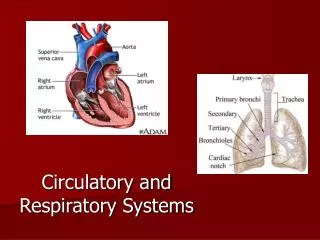
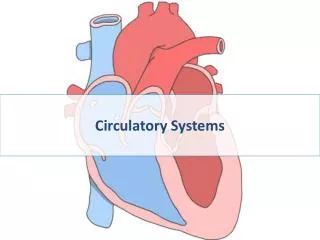
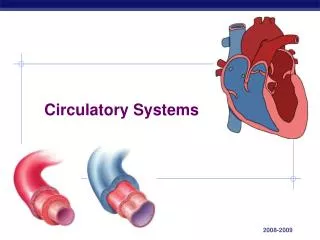
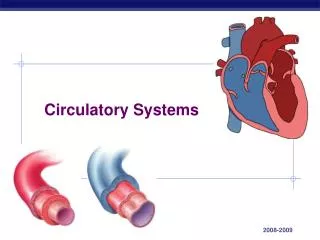
Hearts • Hearts have evolved from two, to three, to four chambered systems • Human heart powers dual circuit (pulmonary and systemic) • EKG reflects complex waveform (systole / diastole)
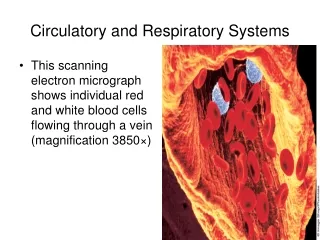
Blood contains... • Plasma (dissolved metabolites, wastes, hormones, ions, proteins) • Red blood cells (Erythrocytes = O2/CO2 transport) • White blood cells: • Neutrophils (immune defense) • Eosinophils (parasite defense) • Basophils (inflammatory response) • Monocytes (immune surveillance) • B-Lymphocytes (antibody production) • T-Lymphocytes (cellular immune response) • Platelets (blood clotting)
White blood cells have an important role in our immune system
The Lymphatic system • Collects fluids and particles in the interstitial fluid primarily the result of capillary leakages • Filters fluid at Lymph Nodes, removing foreign substances • Foreign substances are subsequently destroyed by white blood cell activity
So what about plants? • With developmental complexity came a need for increased circulatory efficiency (cf. Bryophytes versus gymnoperms) • Development of vascular tissue in ferns and upwards • Presence of vascular tissue, together with development of stronger fibrous support, allowed plants to grow taller and compete for sunlight
Types of transportation • Diffusion (small scale only) • Root pressure • Transpiration • In vascular plants, use of • Xylem (water and minerals) • Phloem (sugars)