Key Legal Defenses: Alibi, Self-Defense, and More
This guide explores key legal defenses, including alibi, self-defense, legal duty, and mental disorder, offering insights into their applications and requirements. It covers essential concepts like excusable conduct, intoxication, automatism, consent, entrapment, and mistake of fact. Understanding these defenses can significantly impact legal proceedings, aiding in proving innocence or mitigating charges. By knowing the nuances of double jeopardy and other defenses, individuals can better navigate the complexities of the legal system, ensuring their rights are protected throughout the judicial process.

Key Legal Defenses: Alibi, Self-Defense, and More
E N D
Presentation Transcript
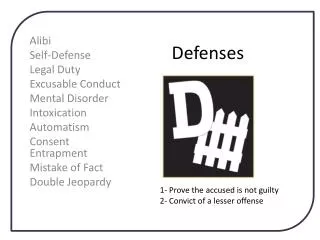
Defenses Alibi Self-Defense Legal Duty Excusable Conduct Mental Disorder Intoxication Automatism ConsentEntrapment Mistake of Fact Double Jeopardy 1- Prove the accused is not guilty 2- Convict of a lesser offense
Alibi The best possible defense. Must be offered as early as possible to maintain credibility. Offers an explanation as to the whereabouts of the accused at the time of the offense.
Self-Defense May defend: yourself, those under your protection, movable and real property, home. Force must be “necessary”. Force must be “reasonable”. Section 38- Stopping a Thief Section 40- Defending Your Home
Legal Duty Certain people, by virtue of their profession, in certain situations. Police officers → speeding, force in arresting.
Excusable Conduct Provocation Duress R v. Morgentaler: “urgent situations of clear and imminent peril when compliance with the law is demonstrably impossible” Honest Mistake But not ignorance of law
Mental Disorder Section 2- Definitions Fitness to Stand Trial Forensic Psychiatry Understanding proceedings Understanding consequences of proceeding Communicating with counsel Fitness at time of Offense Vincent Li
Intoxication General vs. Specific Intent Offenses Limitations, especially in sexual offense cases. Why? Recall, intoxication itself can be an offense (in public, while driving, etc).
Automatism “unconscious, involuntary behaviour… the state of a person who, though capable of action, is not conscious of what he is doing” Element of consciousness. Where else do we see this? Sleepwalking, convulsions, psychological stress. Cases
Consent Used in assault cases (professional sports), some sexual offenses. May never be used for firearms, murder or sexual offenses under the age of consent. Recall for Dave and Mary case.
Entrapment Abuse of police power. Not a true defense; results in a stay of proceedings.
Mistake of Fact Generally, ignorance of the law not acceptable. Why? Mistake of Fact accepted if: Genuine and not a result of neglect. Law states this defense is acceptable. Counterfeit Money Possession of Stolen Goods
Double Jeopardy Section 11- Definition Two options Autrefois acquit Autrefois convict