### Essential Safety Guide for Agricultural Workers in Confined Spaces ###
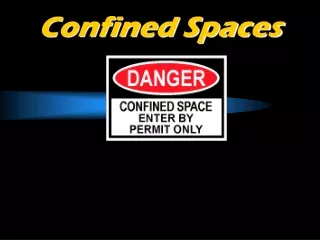
Agricultural workers must be vigilant about the risks associated with confined spaces, which are areas that are enclosed, accessible, and not meant for continuous occupancy, posing unique hazards. Common confined spaces include grain bins, milk tanks, manure ponds, and various tanks that can contain toxic gases, low oxygen levels, and the risk of drowning or engulfment. Awareness and proper training are essential for safe work practices, including understanding the dangers of chemical cleaning agents and mechanical equipment. Always consult your employer or supervisor before entering these hazardous spaces. ###

### Essential Safety Guide for Agricultural Workers in Confined Spaces ###
E N D
Presentation Transcript
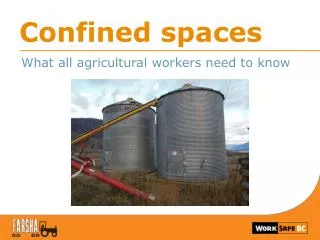
Confined spaces What all agricultural workers need to know
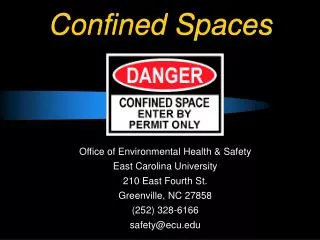
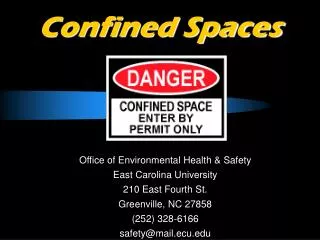
What is a confined space? • Enclosed • Worker can get inside • Not intended for occupancy • Difficult to evacuate or rescue 2
Grain bins • Toxic gases • Low oxygen • Engulfment (by grain) • Bacteria and moulds • Mechanical equipment (augers) 3
Milk tanks • Mechanical parts (cleaning wands, agitators) • Toxic gas (from cleaning chemicals) 4
Manure pond • Toxic gases • Low oxygen • Drowning • Bacteria and moulds • Moving machinery (agitators and pumps) 5
Open-top water tanks • Toxic gases • Low oxygen • Drowning • Bacteria and moulds • Cleaning chemicals 6
Closed additive tanks • Toxic gases • Low oxygen • Drowning • Bacteria and moulds • Cleaning chemicals 7
Boilers • Asbestos • Silica dust • Hot surfaces • Welding fumes 8
Brown water tanks • Toxic gases • Low oxygen • Bacteria and moulds • Mechanical equipment(pumps, agitators) • Drowning 9
Pump sheds • Toxic gases • Low oxygen • Bacteria and moulds • Mechanical equipment • Electrical shock 10
Mobile equipment — manure tanks • Toxic gases • Low oxygen • Bacteria and moulds • Mechanical equipment • Cleaning chemicals 11
Crawl spaces • Toxic gases • Low oxygen • Bacteria and moulds • Vermin (spiders, snakes) 12
Storm water manholes • Toxic gases • Low oxygen • Bacteria and moulds • Drowning 13
Sanitary–septic tanks • Toxic gases • Low oxygen • Bacteria and moulds • Drowning 14
Valve boxes/chambers • Toxic gases • Low oxygen • Bacteria and moulds 15
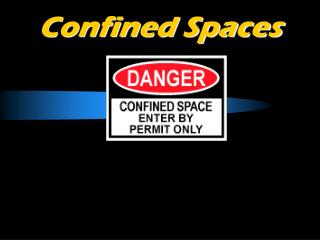
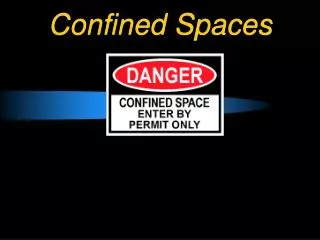
Keep out • Do not enter even to rescue someone, unless you have been trained • Talk to your employer or supervisor 17