Understanding Knowledge: Externalism and Virtue Epistemology
This exploration of knowledge delves into externalism, asserting that a belief is considered knowledge if it accurately reflects the external world, regardless of our awareness. It introduces reliabilism, stating that beliefs are justified through reliable information. Plantinga questions this view, arguing that internal assurance of reliability is essential for knowledge. Virtue epistemology, as proposed by Linda Zagzebski, emphasizes the importance of intellectual virtues in discerning reliable beliefs, creating a holistic approach to knowledge as a way of life rather than a mere procedure.

Understanding Knowledge: Externalism and Virtue Epistemology
E N D
Presentation Transcript
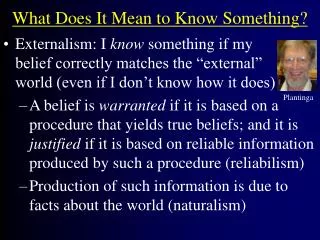
What Does It Mean to Know Something? • Externalism: I know something if my belief correctly matches the “external” world (even if I don’t know how it does) • A belief is warranted if it is based on a procedure that yields true beliefs; and it is justified if it is based on reliable information produced by such a procedure (reliabilism) • Production of such information is due to facts about the world (naturalism) Plantinga
An Objection to Externalism Keith Lehrer Even if the information I have is reliable and correct, I cannot be said to know it unless I (internally) know that it is reliable and correct
Virtue Epistemology Linda Zagzebski • Good thinkers learn to spot what is reliable and correct by developing virtues of mind. For example, they strive to: • accept reliable testimony, avoid hasty generalizations, consider counter-arguments, be open-minded, persevere in inquiry, integrate beliefs, explain complex sets of data, recognize how knowledge is social • this is not a procedure; it is a way of life