Download
1 / 13
150 likes | 301 Vues
This guide explores the fundamental physical and chemical properties of matter, emphasizing observational techniques. Physical properties such as color, shape, size, texture, mass, and melting point are explored, alongside chemical properties like flammability and stability. Observations rely on the five senses, while inferences use prior knowledge for predictions. The guide encourages systematic observation of objects, enhancing skills in distinguishing between them. By comparing different materials like chalk and paper, learners can identify their distinct characteristics, promoting a deeper understanding of material science.

E N D
Physical and Chemical Properties Topic 1
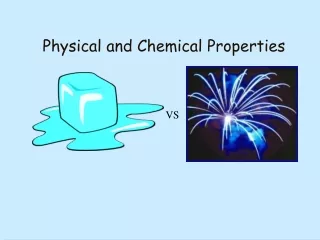
Physical Property • A description of an object’s appearance/characteristics • Color • Shape • Size • Texture • Mass • Weight • Melting point • State of matter
Chemical Property • How one substance will react with another substance • Flammability • Stability • Toxicity • Heat of combustion
Observation • Information taken is using your one or many of your five senses • Sight • Hearing • Taste • Touch • Smell
Inference • Using prior knowledge to make a prediction about an outcome • Some examples… • Look at those dark clouds, it’s going to rain. • It looks really hot outside today. • Amy looks like she is going to cry.
Description of Objects • Now I want you to make 2-3 observations about the three objects being shown to you. • Make sure they are objective… do NOT contain your personal opinion! • Record your observations on your note sheet.
1. What are some observations you could make to distinguish the objects from one another?
3. What physical properties distinguish the piece of paper from the piece of chalk?