Canary natives
Delve into the rich material culture of the Canary Islands, where the identity of its native people is shaped by traditions and past practices. Discover the ingenious use of stone tools developed due to a lack of metals, including scrapers, millstones for grinding gofio, and the sharp obsidian blade known as tabona. Learn about the utilization of bone for making clothing and essential tools, alongside the artistry of handmade ceramics, particularly the "Tabajoste" for goat milking. This project highlights the resilience and resourcefulness of the Canary Island's inhabitants.

Canary natives
E N D
Presentation Transcript
Canary natives material culture
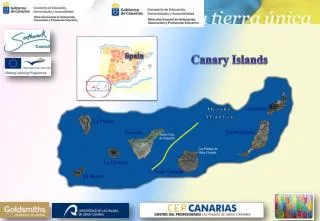
Introduction • Whensomeonedigsintotheroots of culture in theCanaryIslandstheyencounteranidentity of a peoplewithstrongcustoms, whodependontheirpastwhileforgingontheirfuture.
The stone tools • The absence of metals on the islands obliged the natives to make their working tools of stone.
The common ones: The scrapers used normally as elements to cut.
The mill stones used to grind cereals and to obtain “gofio”, their most important food.
Tabona: species of blade done with obsidian that has a great hardness and an edge which can be made very sharp. They used it in combats, to cut weaves and to kill animals.
Bone tools • The cattle economy gave food but also let them take advantage of the skin to get dressed and the bones of the animals to make equipment, such as needles or jewelry.
Ceramics • The manufacture of the ceramic was done by hand and by the women.
The most common ceramic work in Fuerteventura was: “Tabajoste” or “tofio”: this is a container, generally of clay that was used to milk the goats.
Project done by: Ainara Maria Joana