Exploring Poetic Devices: Unlocking the Beauty of Language
Discover the fascinating world of poetic devices that enrich our language and enhance our writing. This guide delves into various literary techniques, including personification, alliteration, assonance, hyperbole, onomatopoeia, metaphor, simile, imagery, idioms, and consonance. Each device is illustrated with clear examples, showcasing how they add depth, emotion, and creativity to poetry and prose. By mastering these techniques, writers can elevate their work, captivating readers through vivid imagery and expressive language.

Exploring Poetic Devices: Unlocking the Beauty of Language
E N D
Presentation Transcript
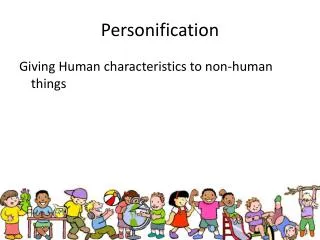
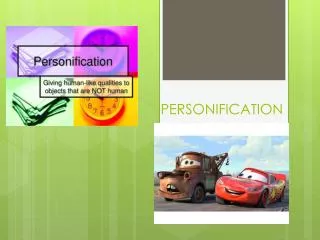
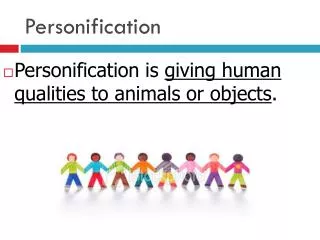
Personification An animal given human-like qualities or an object given life-like qualities. Ex: sun smiling down , or boat hugged the shore
Alliteration • Consonant sounds repeated at the beginnings of words. • Ex: Caleb Calls Chris Cause He’s Coming To California
Assonance • Repeated VOWEL sounds in a line or lines of poetry. • Ex: Lake, Fake, Base, Fade
Hyperbole • Exaggeration often used for emphasis. • Ex: A man that’s like a million times harder
Onomatopoeia • Words that imitate the sound they are naming. • Ex: buzz, hiss, pow, bang
Metaphor • A direct comparison of two unlike things. • Ex: Mind is an ocean; my words are a river
Simile • A comparison of two things using “like” or “as”. • Ex: My mind is an ocean; its smooth as jazz
Imagery • Most images are very visual, but they can also appeal to the senses of sound, touch, taste, or smell. • Ex: The Five Senses
Idiom • An expression where the literal meaning of the words is not the meaning of the expression. It means something other than what it actually says.(Its raining cats and dogs) • Ex: Raining cats & dogs
Consonance • The repeated consonance sounds can be anywhere in the words. • Ex: Rustling, Sad